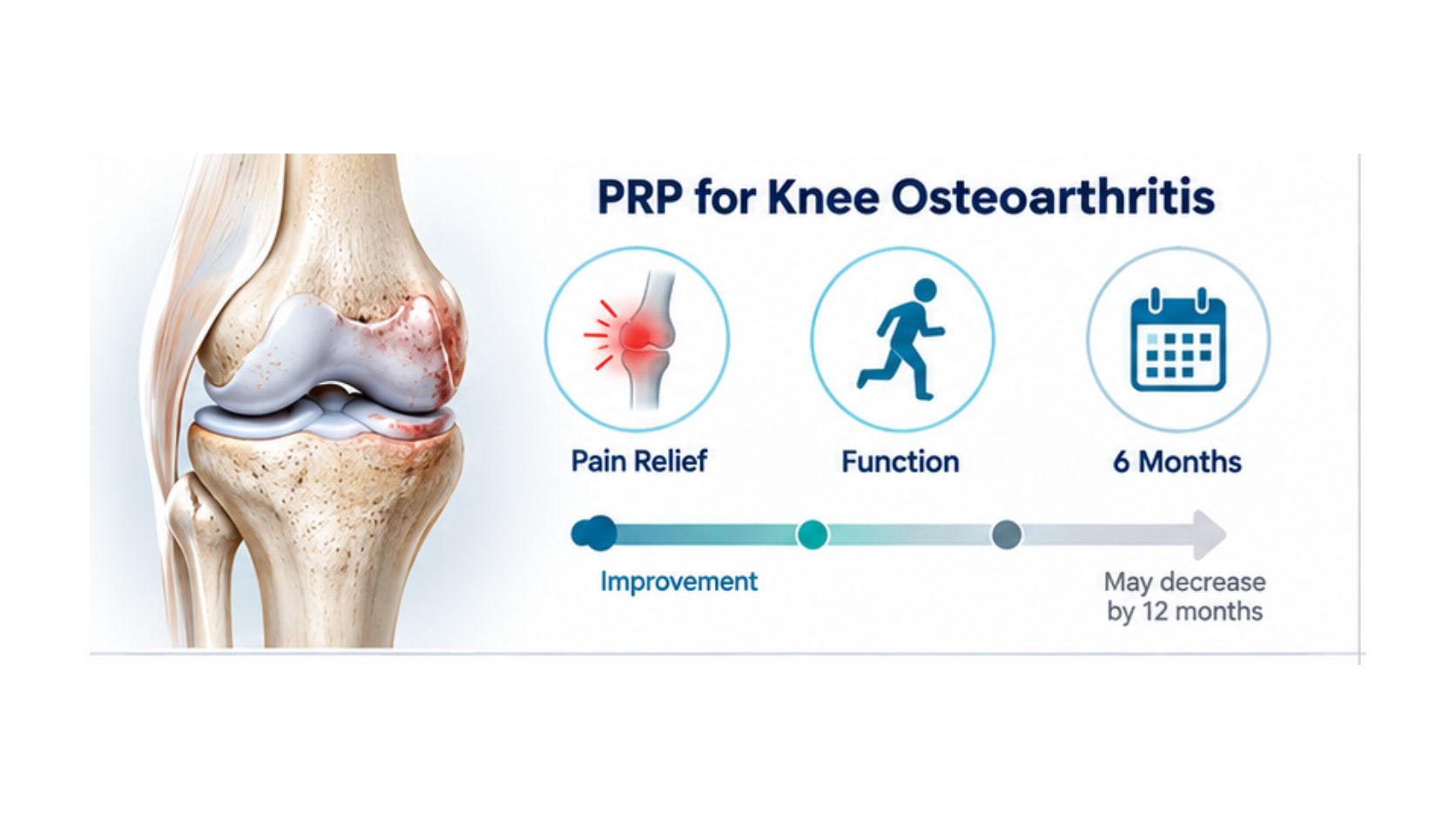
PRP treatment for knee osteoarthritis works for some patients, not all of them. Trial data on mild to moderate osteoarthritis shows real, measurable improvement in pain and function, lasting at least six months for most people. That improvement fades for some by the one-year mark, and it won’t touch a knee that’s already bone-on-bone.
Whether it’s worth trying for you comes down to how far your arthritis has progressed, what you’ve already tried, and, oddly enough, which specific PRP formulation your clinic reaches for.
“Patients come in expecting PRP to either be a miracle cure or a scam, and it’s neither. It works reasonably well in early to moderate arthritis, and I tell people plainly when their knee has moved past the point where an injection is going to help.” Dr. Arpit C Dave, Arthroscopic Surgeon in Dahisar
Knee pain not easing despite rest and physiotherapy?
Does PRP treatment for knee osteoarthritis actually work?
Most articles answer this with “studies show promise,” which tells you nothing. Here’s the actual data, messy parts included.
The largest study on PRP for knee osteoarthritis
The biggest one so far, a 2026 network meta-analysis, pulled together 21 randomized trials and over 2,250 patients. It found PRP produced statistically significant pain and function gains at six months compared to placebo. The gains crossed the minimal clinically important difference on the WOMAC scale, roughly a 9 to 12 point shift, the point where a patient notices it themselves instead of just seeing it on a chart.
By twelve months though, that edge over placebo had mostly worn off. Not the kind of detail that ends up in marketing brochures, but it’s the honest one.
PRP versus hyaluronic acid injections
Against hyaluronic acid, PRP does better. Pooled results from 21 level-1 trials, over 2,000 knees, put PRP ahead of HA on pain at both six and twelve months, no matter which PRP formulation was used.
One paper attached hard numbers to this. WOMAC pain scores dropped 8.5 points on average. IKDC function scores rose 6.2 points. Both held steady at six and twelve months.
Leukocyte-rich or leukocyte-poor: a question nobody’s fully settled
Here’s where it gets contradictory. Twelve trials reviewed in 2025 say leukocyte-poor PRP beats HA through 12 months. Flip to a 2024 review covering similar ground, and leukocyte-rich comes out ahead for six-month pain relief instead. So which one’s right? A later, larger 2026 network meta-analysis basically shrugged, finding no real difference between the two head to head, just that leukocyte-rich carries triple the odds of soreness and swelling afterward.
Three papers, three different conclusions. If a clinic won’t tell you which formulation they’re using, that’s a fair thing to push on.
Where the guidelines actually stand, and why they disagree
Guideline bodies are cautious but not dismissive here. AAOS hasn’t made a routine recommendation, mainly because the underlying studies used different preparations, doses, and schedules, too much variation to draw one tidy conclusion from. That’s a knock on messy research, not a verdict against PRP. We’ve had patients read that as “PRP doesn’t work” when it really just means the trials were inconsistent.
AAPM&R went further in April 2026, releasing guidance that backs PRP for mild to moderate knee OA patients still symptomatic after conservative treatment, and suggests earlier use tends to work better than waiting it out. Two academies, two different comfort levels with the same evidence. That’s medicine sometimes.
None of this closes the debate. But it’s a lot more than “several studies show promise.” Working out whether PRP fits your specific knee starts with proper cartilage grading and assessment, not a coin flip.
Who actually needs PRP for knee osteoarthritis?
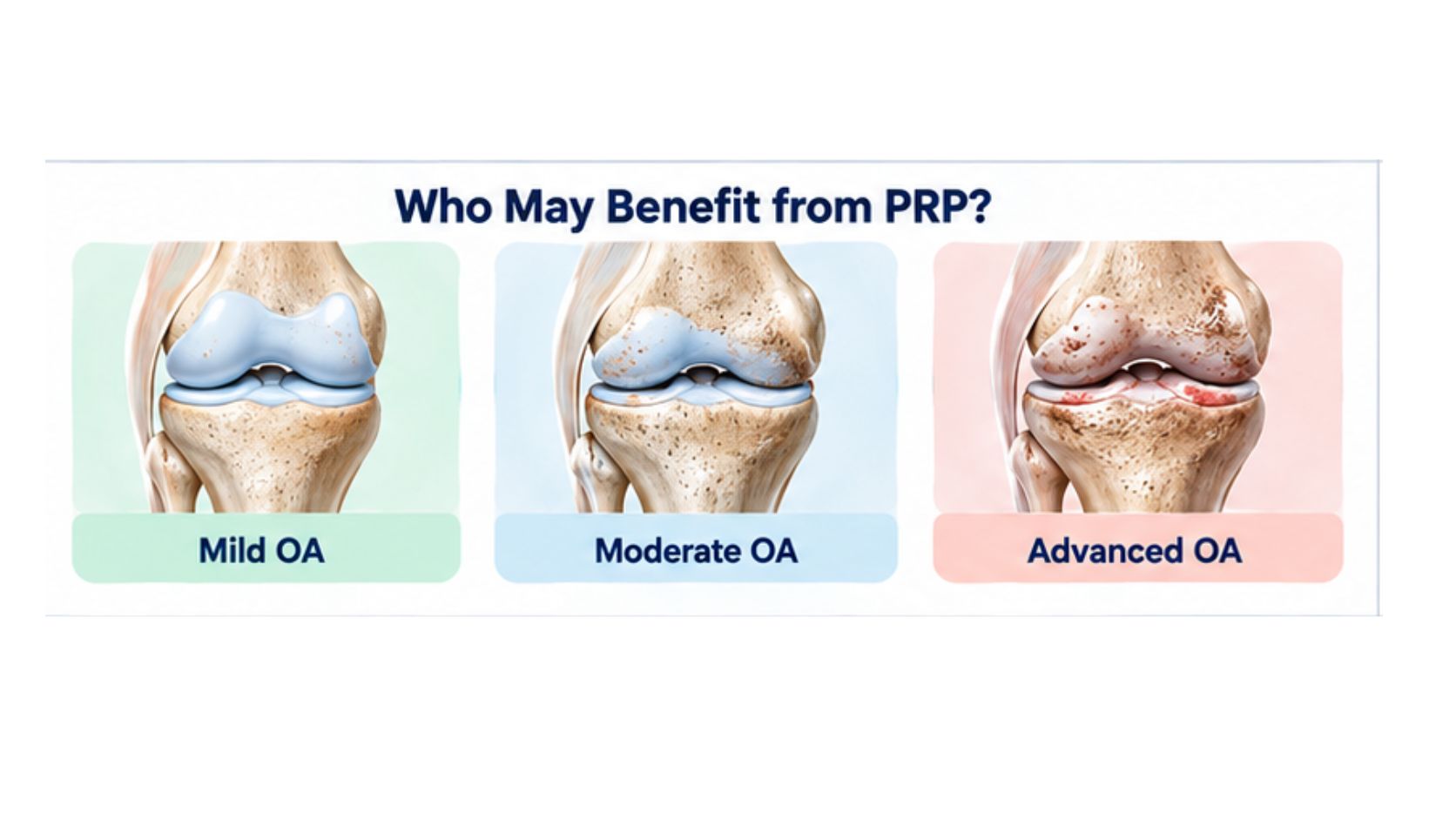
The trial data keeps pointing the same way. Mild to moderate osteoarthritis responds better than advanced or bone-on-bone joints. Makes sense, more intact cartilage means more for the treatment to work with.
Younger, more active patients tend to do better too, though we’ve seen exceptions on both sides of that. Most people who benefit have already gone through physiotherapy, weight management, and basic medication without lasting relief, and they’re trying to buy time before a knee replacement, not fix a joint that’s already given out.
An MRI with proper grading matters more than patients expect going in. It’s really the difference between “this has a real shot” and “you’re about to spend money on something that won’t move the needle.”
A few real examples of how this plays out are in our case studies.
What happens during a PRP knee injection procedure?
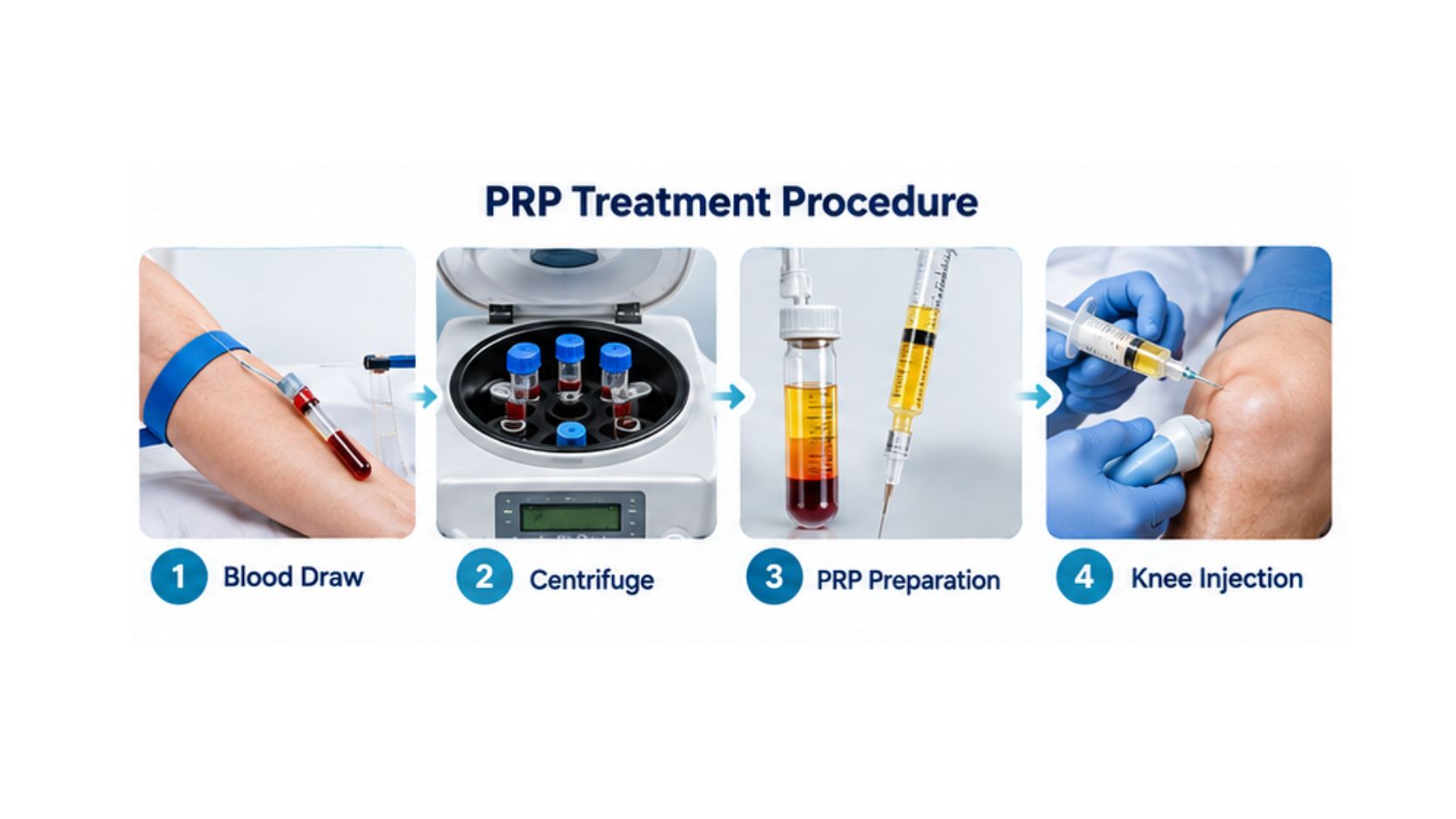
It starts with a blood draw, usually 30 to 60 mL. That goes into a centrifuge and spins for 10 to 30 minutes, separating into red blood cells at the bottom, a thin platelet-and-white-cell layer in the middle (doctors call it the buffy coat), and plasma on top. The platelet layer gets pulled off and concentrated, somewhere between two and eight times its normal density in blood. That’s what gets injected.
The injection is usually ultrasound-guided. Not because the knee is hard to find, obviously, but because getting the needle exactly inside the joint capsule matters for how well the whole thing works. Local anesthetic goes in first. Most patients say it feels like pressure, not pain.
Start to finish, blood draw included, you’re looking at under an hour.
Worth knowing: which leukocyte concentration a clinic uses, rich or poor, changes both the results and how sore you’ll be afterward. Fair question to ask before committing to a course of treatment.
What does PRP treatment for knee cost?
Nobody can give you an honest flat number without seeing your case. Any site quoting one is guessing.
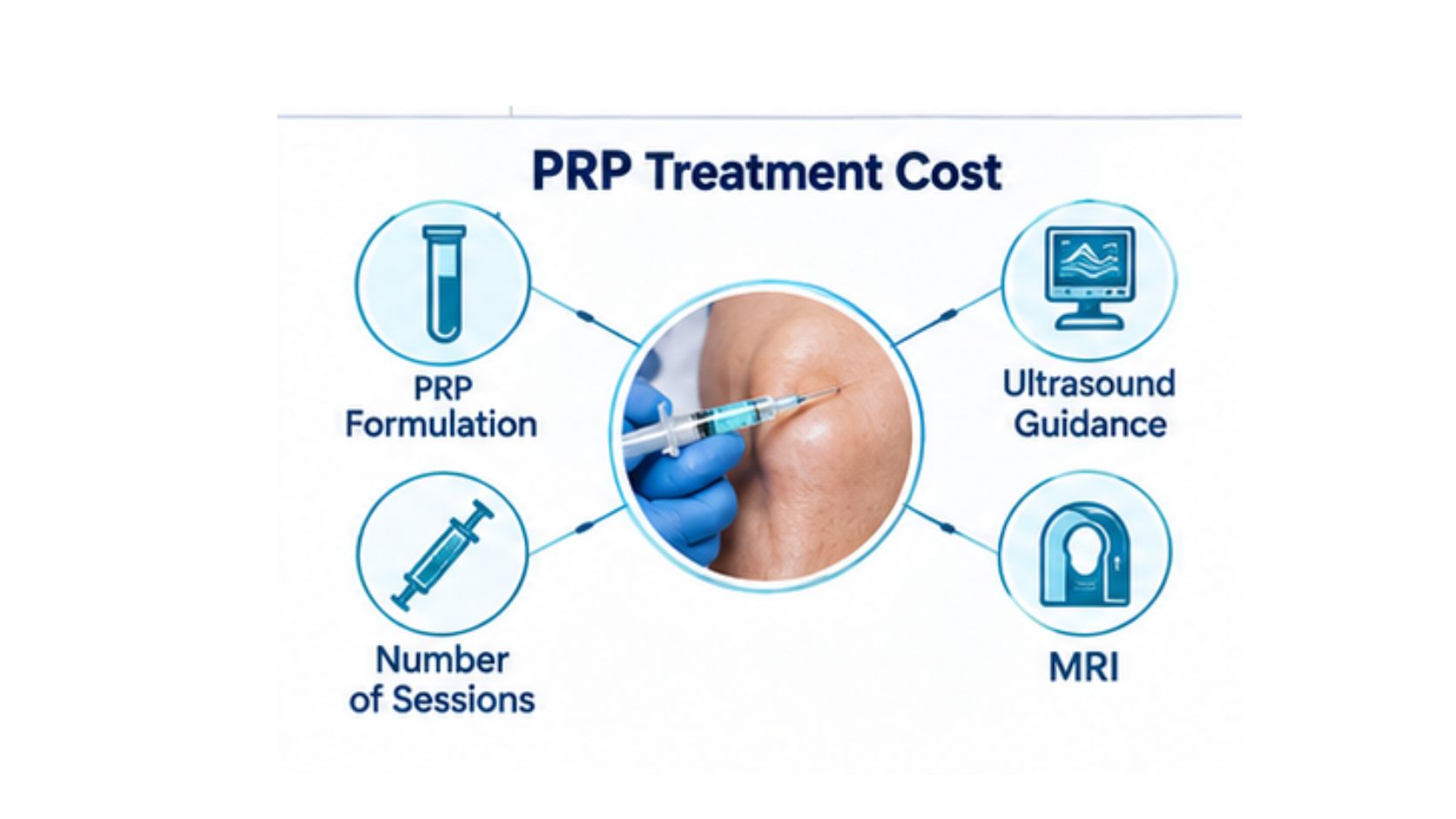
Real cost depends on the leukocyte formulation, whether ultrasound guidance is included, how many sessions you need (usually one to three, four to six weeks apart), and whether an MRI is needed first to confirm the arthritis grade. Insurance is a coin toss too, plenty of insurers still treat PRP as elective or investigational, so out-of-pocket cost is the norm rather than the exception.
The better question isn’t “what does PRP cost.” It’s “what will my specific plan cost, given my imaging and my grade of arthritis.” That’s the number worth asking for.
PRP compared with steroid injections and viscosupplementation
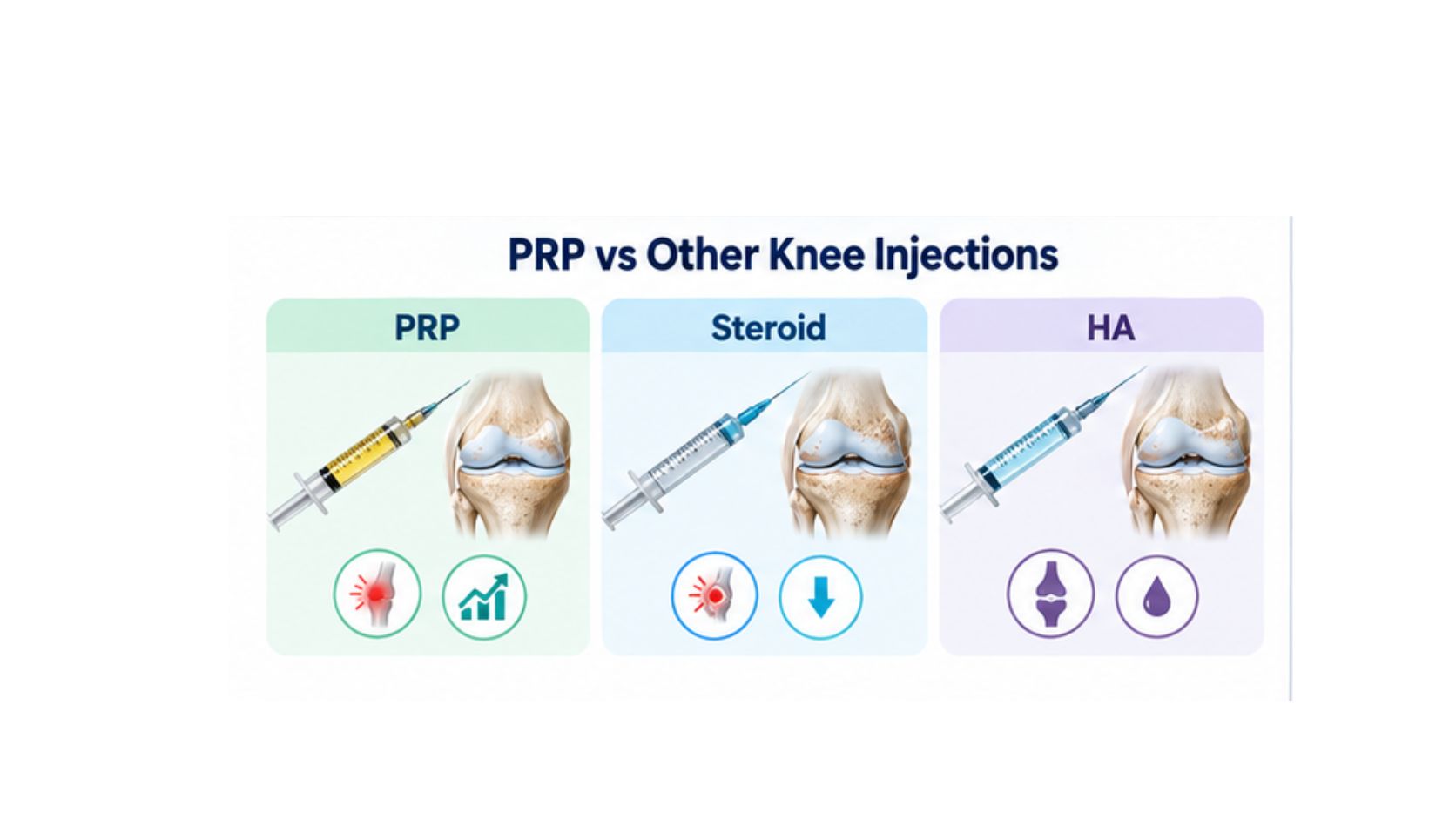
Factor | PRP | Corticosteroid injection | Hyaluronic acid (viscosupplementation) |
|---|---|---|---|
Mechanism | Concentrated platelets reduce inflammation and support tissue repair | Synthetic steroid rapidly suppresses inflammation | Lubricates the joint to reduce friction |
Onset | Gradual, over several weeks | Fast, often within days | Gradual, over several weeks |
Trial-backed duration | Significant benefit through 6 months in most analyses; some fade by 12 months | Short-term, typically weeks | Moderate, generally weaker than PRP in head-to-head trials |
Repeat use | Can be repeated periodically | Frequent repeat use discouraged due to cartilage effects | Can be repeated periodically |
Best fit | Mild to moderate OA, younger or active patients | Acute flare-ups needing fast relief | Mild to moderate OA |
A patient with a bad flare two weeks before a wedding wants the steroid shot, not PRP. Someone in their forties trying to hold off surgery for another decade wants the option with better mid-term data. Same table, two completely different right answers.
How long is recovery after PRP for knee osteoarthritis?
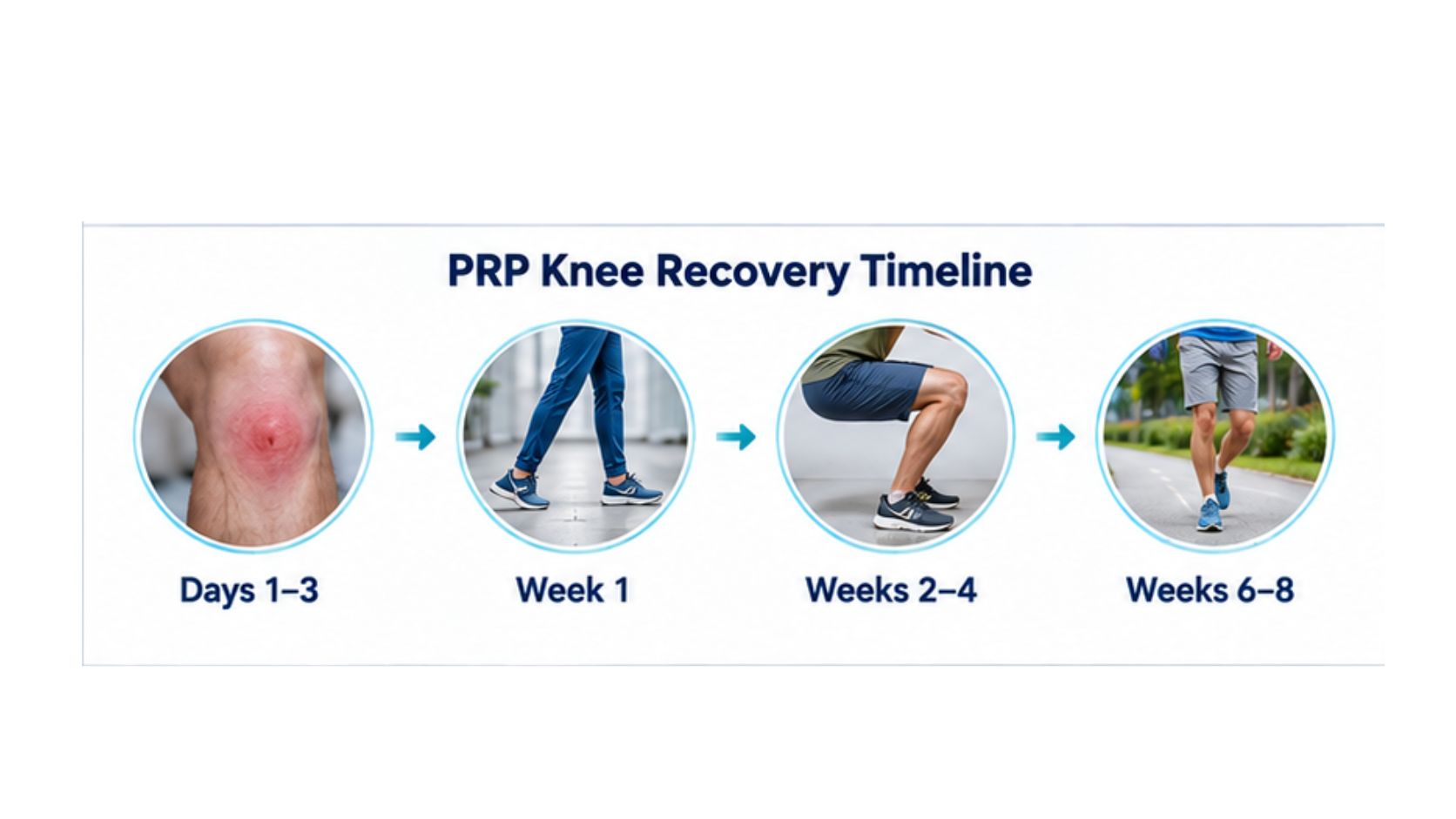
First two, three days, expect some soreness. Maybe mild swelling, a bit of stiffness right at the injection site. Don’t worry, that’s not a bad sign. PRP works by kicking off an inflammatory response on purpose, so early discomfort is just the treatment doing what it’s supposed to.
Week one, light daily stuff is fine. Skip the heavy lifting and the intense workouts though. Somewhere around weeks two to four is usually when patients notice a real shift, less stiffness, pain easing off, though the timeline moves around a lot person to person. Give it six to eight weeks and the full effect tends to be obvious, more so if there’s a second or third session lined up.
No cuts, no stitches, no overnight hospital stay. Ask most patients trying to put off surgery and that’s exactly why PRP appeals to them.
Why choose Dr. Arpit C. Dave for PRP treatment
Dr. Arpit C Dave trained as an MBBS, then picked up his DNB and Diploma in Orthopaedics, and has spent over 15 years in practice since, with fellowships in Italy, Spain, and France along the way. Somewhere north of 1,000 arthroscopic procedures later, cartilage and joint preservation work is just routine at this point.
PRP isn’t handed out to every knee that walks in complaining of pain. It gets recommended when the imaging and arthritis grade actually back it up. Which formulation, how many sessions, what to realistically expect, all of that gets laid out upfront. Nobody’s promising cartilage regrowth here. The evidence doesn’t support that, so why pretend otherwise.
Frequently Asked Questions
How many PRP sessions does knee osteoarthritis usually need?
Usually one to three, spaced four to six weeks apart. It gets adjusted depending on how severe things are and how the joint’s responding.
What are the side effects of PRP for knee osteoarthritis?
Since it comes from your own blood, allergic reactions are basically not a concern. Some soreness or swelling where the needle went in is the most you’ll typically deal with, and leukocyte-rich versions tend to cause a bit more of that than leukocyte-poor ones.
How is PRP different from a knee replacement?
One’s an injection, the other’s surgery. PRP targets pain and function in mild to moderate arthritis without cutting anything open. Knee replacement is reserved for joints that are advanced, bone-on-bone, and haven’t responded to anything else, PRP included.
Can PRP regenerate cartilage or reverse arthritis?
No, and anyone telling you otherwise is overselling it. The evidence backs pain and function gains, mostly through six months. Regrowing cartilage or reversing the disease itself isn’t part of what the data shows.
Your content goes here. Edit or remove this text inline or in the module Content settings. You can also style every aspect of this content in the module Design settings and even apply custom CSS to this text in the module Advanced settings.