Remplissage Procedure in Dahisar, Mumbai
Remplissage is an arthroscopic shoulder surgery that fills a Hill-Sachs lesion to prevent recurrent dislocation. The word “remplissage” is French for “filling.” During the procedure, the infraspinatus tendon and posterior capsule are sutured into the Hill-Sachs bone defect on the back of the humeral head. This converts an “engaging” lesion that catches on the glenoid rim into a stable contained area, dramatically reducing dislocation recurrence.
Dr. Arpit C Dave, as an experienced Arthroscopic Surgeon in Dahisar, Mumbai, specializes in arthroscopic shoulder stabilization including the Bankart-Remplissage combined procedure. Remplissage is indicated for patients with significant Hill-Sachs lesions, off-track lesions, or recurrent anterior shoulder instability. Proper patient selection and surgical technique determine long-term outcomes.
Is Remplissage Right for You?
Not every shoulder dislocation needs Remplissage. The procedure is specifically indicated for:
- Engaging Hill-Sachs lesion – Bone defect that catches on the glenoid during arm motion
- Off-track lesion – Hill-Sachs extends beyond the glenoid track
- Recurrent dislocation – Multiple dislocations after initial Bankart repair
- Bipolar bone loss – Combined glenoid and humeral head defects
- High-risk profile – Young, active patients in contact sports
Patients with non-engaging lesions or minimal bone loss may need only Bankart repair without Remplissage. Surgical decision-making depends on glenoid track and Hill-Sachs interval measurement.
Recurrent shoulder dislocation needs the right surgical solution. Get evaluated by Dr. Arpit C Dave today.
On-Track vs Off-Track Hill-Sachs Lesions
On-Track Lesion
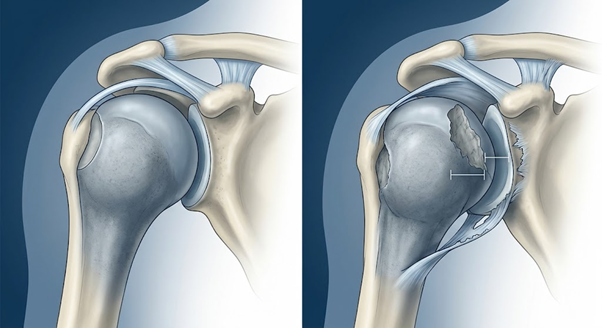
Hill-Sachs defect stays within the glenoid track during shoulder motion. The lesion does not engage the glenoid rim during functional activities. Standard Bankart repair alone is usually sufficient.
Off-Track Lesion
Hill-Sachs defect extends beyond the glenoid track and engages the glenoid rim during normal shoulder motion. This causes the joint to slip out repeatedly. Bankart repair alone has high failure rates. Remplissage is essential to prevent recurrence.
Why Diagnosis Matters
Accurate measurement of bone loss and Hill-Sachs geometry determines surgical strategy:
- X-ray – Initial assessment of joint alignment and bone changes
- CT scan with 3D reconstruction – Best for measuring glenoid bone loss and Hill-Sachs dimensions
- MRI scan – Evaluates labrum, capsule, rotator cuff, and cartilage status
- Diagnostic arthroscopy – Direct visualization of engaging behavior
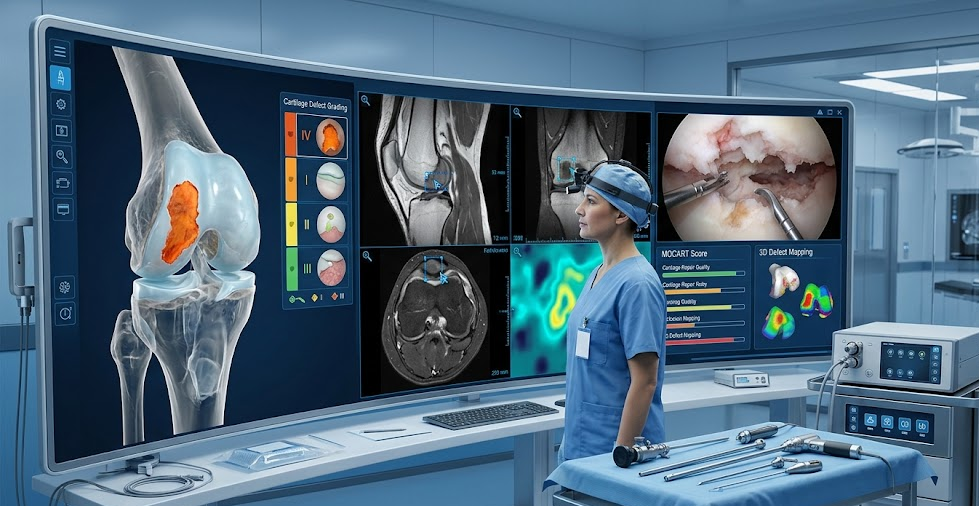
Glenoid track measurement, Hill-Sachs interval, and bipolar bone loss assessment determine whether you need isolated Bankart repair, combined Bankart-Remplissage, or a Latarjet procedure.
Symptoms You'll Experience
Early Symptoms
A first-time shoulder dislocation, often during sports or a fall. Apprehension when raising the arm overhead. Mild instability when reaching back or throwing. Many patients dismiss these warning signs after initial reduction.
Progressing Symptoms
Repeated dislocations with progressively less force required. The shoulder slips out during sleep or routine activities. Episodes become frequent. Sports performance suffers. Each dislocation enlarges the Hill-Sachs lesion further.
Advanced Symptoms
Chronic instability with multiple dislocations per month. Major bone loss on imaging. Subluxation episodes even without full dislocation. At this stage, Remplissage alone may not be enough. Latarjet or bone block procedures may be required.
Treatment Philosophy - Progressive Approach
Shoulder instability treatment follows a stepwise progression based on dislocation count, bone loss, and patient activity level. The goal is restoring stable, painless shoulder function with low recurrence risk.
Stage 1 - Conservative Care After First Dislocation
Sling immobilization, pain management, and physiotherapy form initial care. Strengthening of rotator cuff and scapular stabilizers. Activity modification for low-risk individuals. Conservative care has high failure rates in young, athletic patients.
Stage 2 - Isolated Bankart Repair
For first-time dislocation with minimal bone loss, arthroscopic Bankart repair restores the labrum and capsule. Hill-Sachs lesion is left untreated if it stays on-track. Works well for older, low-demand patients without significant bone defects.
Stage 3 - Bankart-Remplissage Combined Surgery
When the Hill-Sachs lesion is engaging or off-track, Remplissage is added to Bankart repair.
Standalone Bankart Repair:
Restores the torn labrum to the glenoid using suture anchors. Best for non-engaging Hill-Sachs lesions.
Bankart-Remplissage Combined:
Adds Hill-Sachs filling to the Bankart repair. The infraspinatus tendon and posterior capsule are sutured into the defect, eliminating engagement. Reduces recurrence rates from over 25% to under 5%.
Latarjet Procedure (Alternative):
For severe glenoid bone loss over 20-25%, the coracoid process is transferred to the front of the glenoid. Provides bony augmentation when soft tissue procedures are insufficient.
Osteochondral Allograft:
Donor cartilage-bone graft for very large defects. Excellent for complex osteochondral lesions.
The right shoulder stabilization technique can end years of instability. Find out which procedure suits your shoulder with a thorough evaluation.
Our Remplissage Procedure
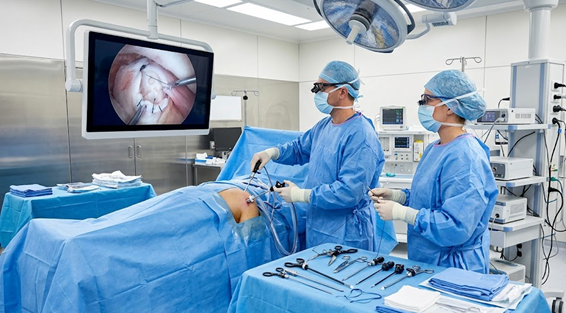
We perform Remplissage arthroscopically through 3-4 small keyhole incisions, almost always combined with Bankart repair. Under HD camera visualization, the Hill-Sachs defect is debrided, suture anchors are placed in the lesion, and the infraspinatus tendon plus posterior capsule are tenodesed into the bone defect. The Bankart lesion is then repaired with additional anchors. The procedure takes 1.5 to 2.5 hours.
Procedure Highlights
Minimally invasive arthroscopic approach
Suture anchors placed in Hill-Sachs defect
Infraspinatus tendon sutured into bone
Concurrent Bankart repair in same procedure
Same-day or short-stay discharge
Why Rehabilitation Is Everything
Remplissage surgery creates the conditions for stability. Healing happens through your post-operative protocol. The infraspinatus tendon needs 6 to 8 weeks to heal into the Hill-Sachs defect before stretching is allowed. Returning to motion too early disrupts the tenodesis. Discipline determines outcome more than surgery itself.
Recovery and Rehabilitation
Recovery Timeline
- Week 0 to 4: Sling immobilization, finger and elbow movement only
- Week 4 to 8: Gentle passive range of motion, gradual sling weaning
- Week 8 to 12: Active range of motion, light strengthening begins
- Month 3 to 4: Progressive rotator cuff and scapular strengthening
- Month 4 to 6: Sport-specific drills, throwing programs initiated
- Month 6 to 9: Full return to contact sports for cleared patients
Rehab Essentials
- Strict sling adherence for first 4 weeks
- No external rotation past neutral until 8 weeks
- Progressive rotator cuff strengthening
- Scapular stabilization exercises
- Avoid overhead lifting until cleared
Treatment Cost
Remplissage procedure cost in Mumbai varies by complexity:
Isolated Bankart Repair: ₹1.5 lakhs to ₹2.5 lakhs
Bankart-Remplissage Combined: ₹2 lakhs to ₹3.5 lakhs
Latarjet Procedure: ₹2 lakhs
Costs include surgeon fee, anesthesia, hospital, suture anchors, and post-operative care. Many insurance policies cover shoulder stabilization surgery when documented as medically necessary.
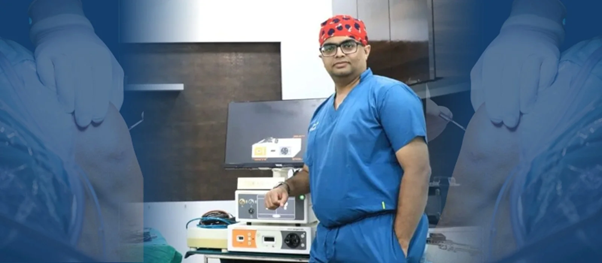
Why Choose Dr. Arpit C Dave?
Dr. Arpit C Dave is an orthopedic and arthroscopic surgeon with 14+ years of experience and around 10,000 arthroscopy surgeries performed. He specializes in shoulder stabilization and sports surgery, approaching every shoulder instability case with a diagnosis-first method. Using 3D CT measurement of the glenoid track and Hill-Sachs interval, he determines whether isolated Bankart, Bankart-Remplissage, or Latarjet is the right choice. This evidence-based decision-making helps prevent one of the most common causes of shoulder surgery failure: choosing the wrong procedure.
When surgery is necessary, Dr. Dave brings international training from Italy, Spain, and France, with expertise in arthroscopic Bankart-Remplissage, Latarjet, and revision shoulder stabilization. Concurrent labral, rotator cuff,, and capsular issues are corrected in the same procedure. He also coordinates with sports physiotherapists and conducts return-to-sport testing for athletes in Dahisar, Mumbai.
Stop accepting recurrent shoulder dislocations as your normal. Schedule consultation with Dr. Arpit C Dave.
Frequently Asked Questions
What does Remplissage mean?
Remplissage is the French word for “filling.” The procedure fills the Hill-Sachs defect on the humeral head with the infraspinatus tendon and posterior capsule, preventing the bone defect from engaging the glenoid rim during shoulder motion.
Who needs Remplissage surgery?
Patients with engaging or off-track Hill-Sachs lesions, recurrent dislocations after failed Bankart repair, bipolar bone loss, or high-risk profiles like young contact-sport athletes. Glenoid track measurement on CT scan determines candidacy.
How is Remplissage different from Bankart repair?
Bankart repair fixes the torn labrum on the front of the shoulder. Remplissage fills the bone defect on the back of the humeral head. They are complementary procedures. Most modern shoulder stabilization surgeries combine both for best stability.
Will Remplissage limit my shoulder motion?
Modern Remplissage techniques cause minimal external rotation loss, typically 5 to 10 degrees. This is rarely functionally significant. The trade-off is dramatic reduction in dislocation recurrence, especially for athletes returning to overhead sports.
How long does Remplissage recovery take?
Initial sling use lasts 4 weeks. Active range of motion begins at 8 weeks. Light strengthening starts at 12 weeks. Return to contact sports is allowed at 6 to 9 months after thorough rehabilitation.
What is the success rate of Remplissage?
Combined Bankart-Remplissage shows recurrence rates under 5% in most studies, compared to over 25% for isolated Bankart in patients with significant Hill-Sachs lesions. Success depends on patient selection and rehabilitation compliance.
Can Remplissage be done as a revision surgery?
Yes. Remplissage is commonly added during revision surgery when isolated Bankart repair has failed and engaging Hill-Sachs is identified. Revision results are good but slightly lower than primary combined procedures.
What if I have severe glenoid bone loss?
For glenoid bone loss exceeding 20 to 25%, Remplissage alone is insufficient. The Latarjet procedure or other bone block techniques restore the glenoid surface. Accurate CT measurement before surgery is essential.