
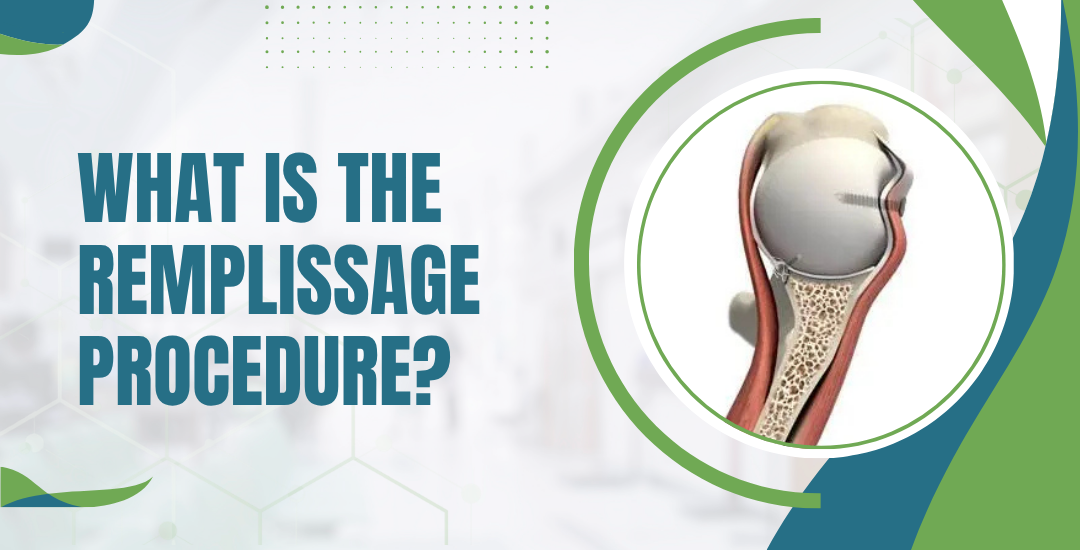
The remplissage procedure is an arthroscopic shoulder surgery that fills a bony dent on the upper arm bone, called a Hill-Sachs lesion, using the infraspinatus tendon and the back of the joint capsule. That dent forms when the humeral head hits the socket rim during a dislocation, and a large one can catch on the rim and pop the shoulder out again. Surgeons almost always pair it with a Bankart repair for recurrent anterior shoulder instability.
According to Dr. Arpit C Dave, Arthroscopic Surgeon in Dahisar, “a shoulder that keeps slipping out after a soft tissue repair often has a bone dent nobody addressed.”
Shoulder dislocating repeatedly despite treatment?
Who Needs the Remplissage Procedure?
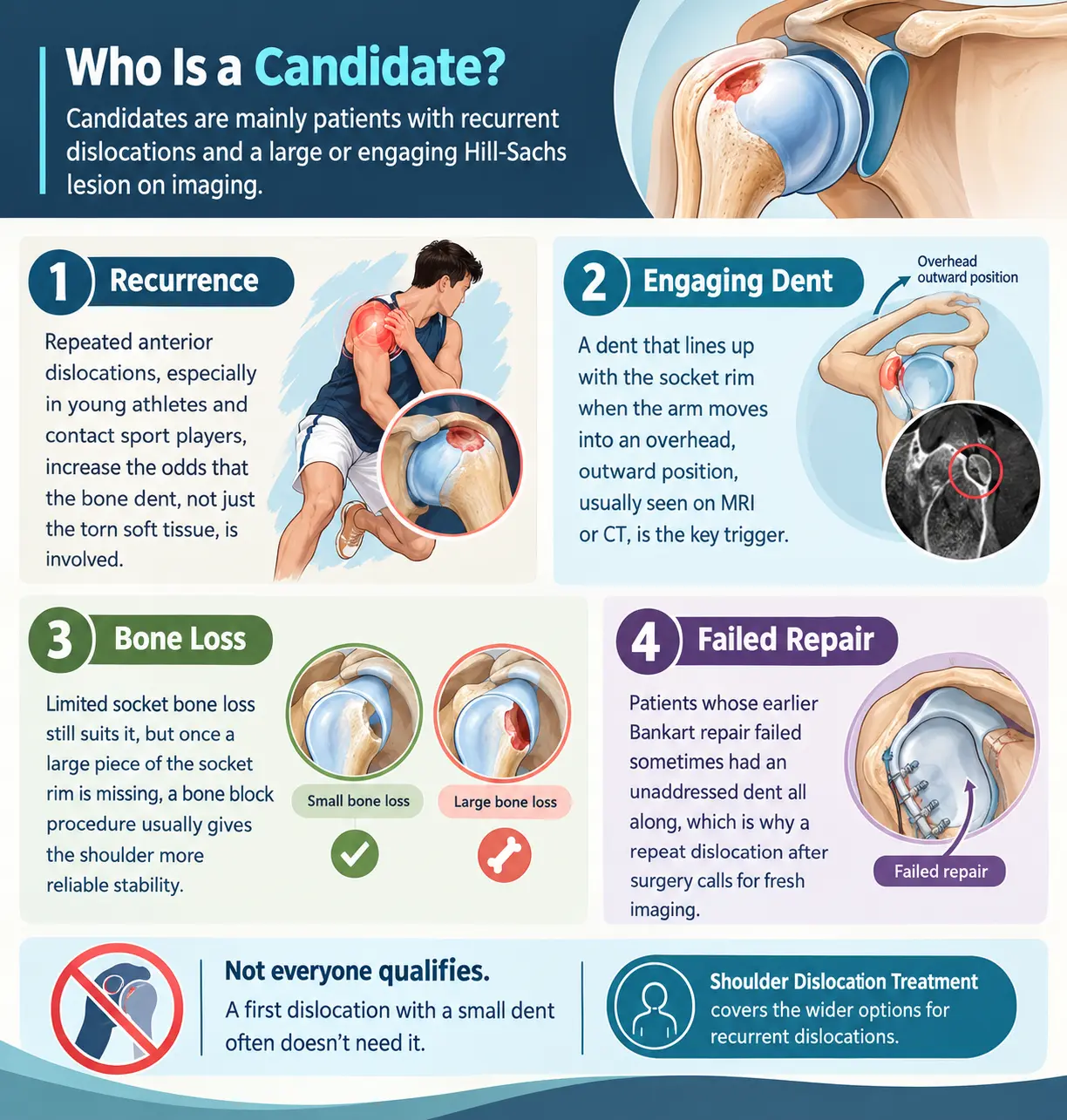
Not everyone qualifies. A first dislocation with a small dent often doesn’t need treatment.
Shoulder Dislocation Treatment covers the wider options for recurrent dislocations.
How Is the Remplissage Procedure Performed?
It’s performed arthroscopically through small incisions, with a camera guiding every step.
Anchors: Small suture anchors go into the dent in the bone, and they act as the fixed points that hold the tissue meant to fill it.
Sutures: Stitches pass through the infraspinatus tendon and back capsule, and tying them draws that tissue down into the defect so it heals in place over the dent.
Effect: The dent turns from a joint surface problem into one outside the joint, so it can’t catch on the socket rim anymore, even with the arm raised and turned outward.
Labrum: The torn labrum gets repaired in the same sitting, since remplissage supports a Bankart repair and doesn’t replace it, so both the soft tissue and bone sides get fixed.
Simple idea, honestly. Fill the hole so nothing can catch on it.
Remplissage rarely stands alone, and the Bankart repair it’s paired with is explained in a separate blog.
What Is Recovery Like After the Remplissage Procedure?
Recovery follows a staged plan that protects the repair first and restores motion and strength later.
Sling: The arm rests in a sling for several weeks, and that rest gives the tendon and capsule time to bond into the bone without being pulled on.
Rehab: Because rushing physiotherapy is the quickest way to undo the repair, it starts with gentle assisted motion, then builds toward strength and control as the tissue heals.
Motion: A small loss of external rotation is possible, though reviews report minimal change in overall shoulder range, and most patients keep functional movement.
Return: Return to contact and overhead sport usually waits several months, until strength and control match the other side and the surgeon is satisfied with the shoulder’s stability.
Encouraging outcomes. And a systematic review reported good to excellent scores after remplissage.
The infraspinatus belongs to the rotator cuff, so Rotator Cuff Repair is related reading, as is Frozen Shoulder Treatment for lingering stiffness.
Key Takeaways
- Remplissage fills a bony dent on the upper arm bone, called a Hill-Sachs lesion, using the infraspinatus tendon and back capsule.
- It’s done arthroscopically and almost always alongside a Bankart repair, not on its own.
- Candidates have recurrent dislocations and a large or engaging dent, with limited socket bone loss.
- Large socket bone loss usually calls for a bone block procedure instead.
- Recovery means a sling, staged physiotherapy and a return to sport after several months, with a small chance of lost external rotation.
Frequently Asked Questions
Is remplissage done as a standalone surgery?
No, it’s added to a Bankart repair, not performed on its own.
Does remplissage limit shoulder movement?
Some patients lose a little external rotation, though most keep functional motion.
What is a Hill-Sachs lesion?
A dent in the upper arm bone caused by hitting the socket rim during dislocation.
Who is not a candidate for remplissage?
Patients with a small dent or large socket bone loss usually need other treatment.
Disclaimer :
This blog is for educational and informational purposes only and should not be considered professional advice.