
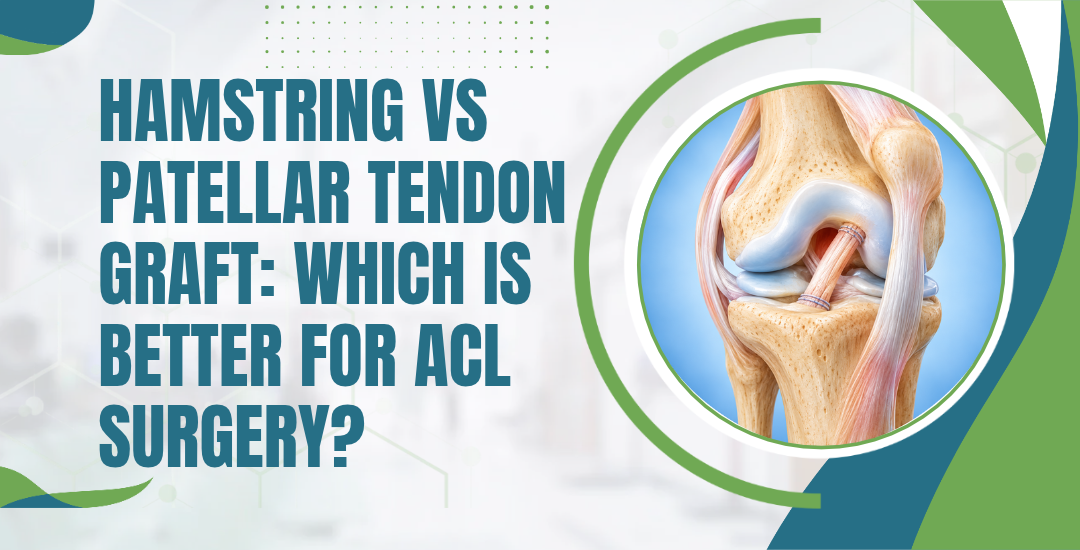
Both of the grafts have their advantages and disadvantages. Research that has done a comparison of the two has yielded no clear conclusion. A patellar tendon graft will provide a slightly stiffer knee on stability testing, but will be more painful when kneeling. Usually, a hamstring graft is less stressful at the front of the knee although the hamstrings must be carefully strengthened following the graft. The best option will be based on your age, sport, work, and knee condition.
According to Dr. Arpit Dave, an Arthroscopic Surgeon in Dahisar, Mumbai, “There is no graft that suits every patient. A patellar tendon graft can give a very firm knee, but many people feel it when they kneel. A hamstring graft is kinder at the front of the knee, but the back of the thigh needs proper rehab afterwards. I choose based on the person’s age, sport, work and knee, not on a fixed rule.”
Unsure whether a hamstring or patellar tendon graft is better for your ACL surgery?
A comparison of the two types of ACL grafts.
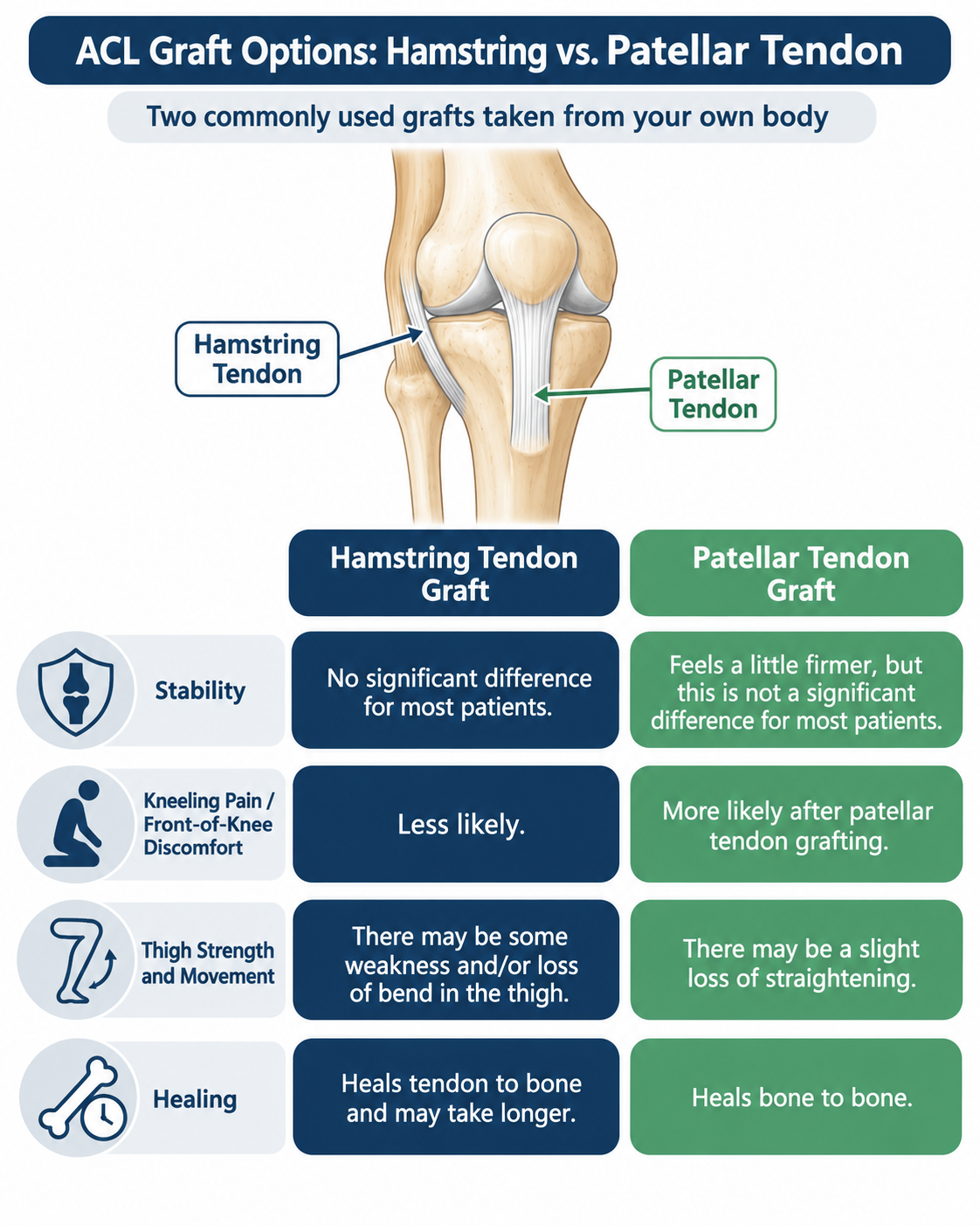
Which one suits you is decided after an examination, as part of planning your ACL tear surgery.
How does it feel to have each graft?
- First few weeks: Hamstring grafts cause pain in the back of the thigh. Patellar grafts result in pain to the front of the knee.
- Strengthening the hamstring: Hamstring strengthening is added in gradually after a hamstring graft.
Regaining full straightening and quadriceps control is first following a patellar graft. - Kneeling and sitting on the floor: This is important if you need to kneel at work, prayer or daily activities or sit on the floor. Let your surgeon know, as it may impact the selection.
The same graft thinking applies to other knee procedures covered under ligament reconstruction surgery, so it helps to ask your surgeon why a particular graft was recommended.
What is the Right ACL Graft for You?
- Activity level and age: The high activity level and young athlete may be directed differently from the office-going adult.
- Frequent kneeling or squatting may be a disadvantage for a patellar tendon graft.
- There are some sports which are more dependent on hamstring strength that surgeons may be wary of using a hamstring graft for.
- Previous surgery or thin hamstring tendons can restrict the options.
Key Takeaways
- Microfracture and OATS suit small defects under about 2 cm² in a stable knee.
- MACI and allograft are reserved for larger or deeper lesions.
- Misaligned legs need correction, or the repair won’t last.
- Recovery after cell-based or graft-based repair usually runs six to twelve months.
- Surgery is considered only after non-surgical care has failed.
Frequently Asked Questions
Which of the following does NOT have a high re-tear rate?
There is no clearly defined difference between the rate of re-tear of hamstring and patellar tendon grafts, based on the studies that have been done to date comparing the two. The age at which rehabilitation and return to sport is completed is just as important.
Does the hamstring graft weaken the leg?
Some people experience slight weakness or stiffness in the knee just after surgery when bending for a short period of time. Targeted physiotherapy usually helps the hamstrings recover.
Does kneeling hurt post patellar tendon graft?
After a patellar tendon graft, you will have a higher rate of pain when you kneel than if you have a hamstring graft. It tends to get better over time, but may stay for some people.
Is it possible to determine the graft before the surgery?
It is typically discussed at consultation post exam and MRI. In some cases the final decision is made at the time of surgery such as if the hamstring tendons are too thin.
Disclaimer :
This article is for general information and does not replace a consultation with a qualified doctor. Graft choice and recovery vary from person to person, and individual results cannot be guaranteed. Please consult your surgeon before making decisions about your treatment.