
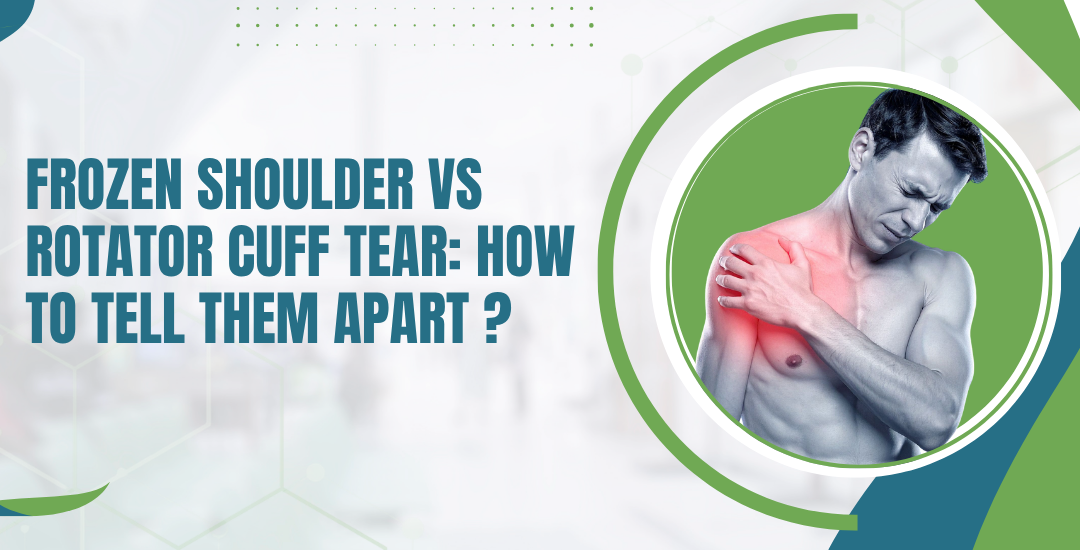
Frozen shoulder is stiffness from a tight, inflamed joint capsule, the shoulder won’t move even with help. A rotator cuff tear is muscle or tendon damage, the shoulder is weak but can still be moved passively by someone else. Both injuries cause shoulder pain and limited use, which is why they get confused so often. The real test is whether the joint moves at all when you’re not using your own muscles. That single check usually tells the doctor which one it is.
“I see this confusion every week. Frozen shoulder locks up entirely, even passive motion fails. A cuff tear keeps the joint mobile when someone else lifts the arm, but the patient can’t lift it themselves.” — Dr. Arpit C Dave, Arthroscopic Surgeon in Dahisar, Mumbai
Shoulder pain not getting better?
How Are Frozen Shoulder and Rotator Cuff Tear Different?
The two conditions can start with the same complaint, pain at night and trouble lifting the arm. The cause is what separates them. Frozen shoulder is a capsule problem, the cuff tear is a tendon problem. The differences become obvious during a proper exam.
| Sign | Frozen Shoulder | Rotator Cuff Tear |
| Cause | Inflamed, tight joint capsule | Torn tendon or muscle |
| Pain pattern | Worse at night, deep ache | Sharp with overhead use |
| Passive movement | Restricted in all directions | Mostly preserved |
| Weakness | Mild, mostly stiffness | Marked, especially overhead |
| Common age group | 40 to 60, often diabetic | Above 50 or after injury |
For confirmed cases, Frozen Shoulder Treatment in Dahisar, Mumbai starts with physiotherapy, medications, and capsular release if needed.
Which One Needs Surgery and Which One Heals With Therapy?
Most frozen shoulders settle with structured physiotherapy and medication over several months, surgery is reserved for stubborn cases. Rotator cuff tears depend on size, partial tears often respond to rehab, full tears in active patients usually need arthroscopic repair. The right call depends on the scan, the patient’s age, and how much function is lost.
- Frozen shoulder, mild to moderate. Physiotherapy plus anti-inflammatories work for most patients within 6 to 12 months.
- Frozen shoulder, resistant. Arthroscopic capsular release frees the joint when months of therapy aren’t moving the needle.
- Cuff tear, partial. Rehab and PRP injections often restore function without surgery.
- Cuff tear, full thickness. Arthroscopic repair brings back strength, especially for active or younger patients.
For tears confirmed on MRI, Rotator Cuff Repair in Dahisar, Mumbai restores tendon attachment with anchors and sutures.
Why Choose Dr. Arpit C. Dave for Shoulder Pain?
Dr. Arpit C Dave has spent over a decade focused on arthroscopic knee and shoulder work, with 6,000-plus surgeries behind him. His training spans Italy, Spain (with the FC Barcelona team), and France. The Dahisar, Mumbai clinic has in-house MRI and CT, and the rehab team works alongside the surgical plan from day one.
Frequently Asked Questions
Can frozen shoulder be mistaken for a rotator cuff tear?
Yes, both cause pain and limited motion, the passive movement test separates them.
Does a rotator cuff tear cause stiffness?
Stiffness is mild, the bigger issue is weakness during overhead use.
How long does frozen shoulder usually last?
Most cases resolve within 12 to 24 months with proper physiotherapy and care.
Can a rotator cuff tear heal on its own?
Partial tears can heal with rehab, full thickness tears rarely heal without surgery.
References :
- American Academy of Orthopaedic Surgeons (AAOS) — Rotator Cuff Tears: https://orthoinfo.aaos.org/en/diseases–conditions/rotator-cuff-tears/
Journal of Bone and Joint Surgery (JBJS) — Frozen Shoulder Management: https://journals.lww.com/jbjsjournal/
Your content goes here. Edit or remove this text inline or in the module Content settings. You can also style every aspect of this content in the module Design settings and even apply custom CSS to this text in the module Advanced settings.