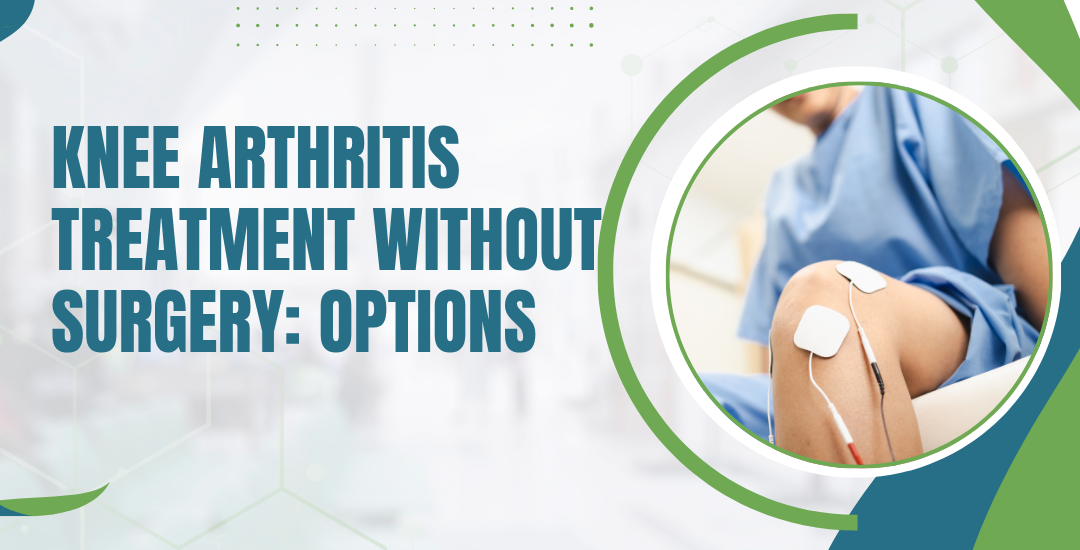
Yes, knee arthritis can usually be managed without surgery in the early and moderate stages. The whole point of non-surgical care is cutting pain, keeping the joint working and slowing down how fast the cartilage wears. Weight control, physio, medication, smarter activity and the occasional joint injection do most of the heavy lifting here. Surgery only comes up later, once these stop helping and the pain starts running your day.
According to Dr. Arpit C Dave, Arthroscopic Surgeon in Dahisar, “Most early knee arthritis never sees an operation, dropping a few kilos and getting the right muscles strong does more for the joint than people expect.”
Knee pain and stiffness making everyday movement harder?
What non-surgical options actually work for knee arthritis?
A handful of conservative treatments genuinely take the edge off and protect the joint when they’re used right.
- Weight management. Here’s what most people miss, every extra kilo loads the knee with several times that force when you walk, so even a small drop in weight lifts a real burden off it
- Physiotherapy. Get the quadriceps and the muscles around the knee stronger and they start sharing the load, which cuts pain surprisingly well for something that’s just exercise
- Medication. Anti-inflammatories and painkillers are handy during a flare, though they’re masking symptoms rather than touching the actual wear underneath
- Joint injections. Cortisone settles inflammation fast whereas PRP and hyaluronic acid play a longer game, aiming to ease pain and back up the joint over months
Once injections enter the picture, checking for meniscus tear involvement matters, the two tend to turn up together in worn knees.
What lifestyle changes help slow knee arthritis?
Everyday habits decide a lot about how quickly arthritis moves, and a few tweaks add up.
- Low-impact exercise. Swimming, cycling, an easy walk, these keep the joint moving without the pounding that running or jumping hammers into cartilage that’s already thinning
- Footwear and supports. A cushioned shoe, the right insole or a brace can shift load off the sore side of the joint, and patients often underrate how much this helps
- Activity pacing. Break the heavy jobs into smaller bits, stay off your feet for stretches, and you head off flare-ups before they kick in
- Staying active. Sounds backwards, but resting too much just stiffens things up more, so steady gentle movement beats parking yourself on the sofa
Most of this loops back to working out why your knee swells after you’ve been active, since that swelling usually tells you what the joint will and won’t tolerate.
Why Choose Dr. Arpit C. Dave for Knee Arthritis Treatment?
Dr. Arpit C Dave holds an MBBS, DNB and Diploma in Orthopaedics with over 15 years in orthopaedic practice plus fellowship training across Italy, Spain and France. He’s done more than 1000 arthroscopic procedures and handles plenty of arthritis without ever picking up a scalpel.
Surgery’s the last resort here, not the first idea on the table. Conservative options get a fair go first, shaped around how active you are and how far things have actually gone. Keeping you moving is the goal, not booking theatre time.
Frequently Asked Questions
Can knee arthritis be cured without surgery?
No cure exists, but symptoms can be well managed non-surgically for years.
Does walking help or worsen knee arthritis?
Gentle walking usually helps, while overdoing it can trigger flare-ups.
Are knee injections effective for arthritis?
Yes, they ease pain for weeks to months depending on the type.
When does knee arthritis need surgery?
When pain and stiffness persist despite full non-surgical treatment.