
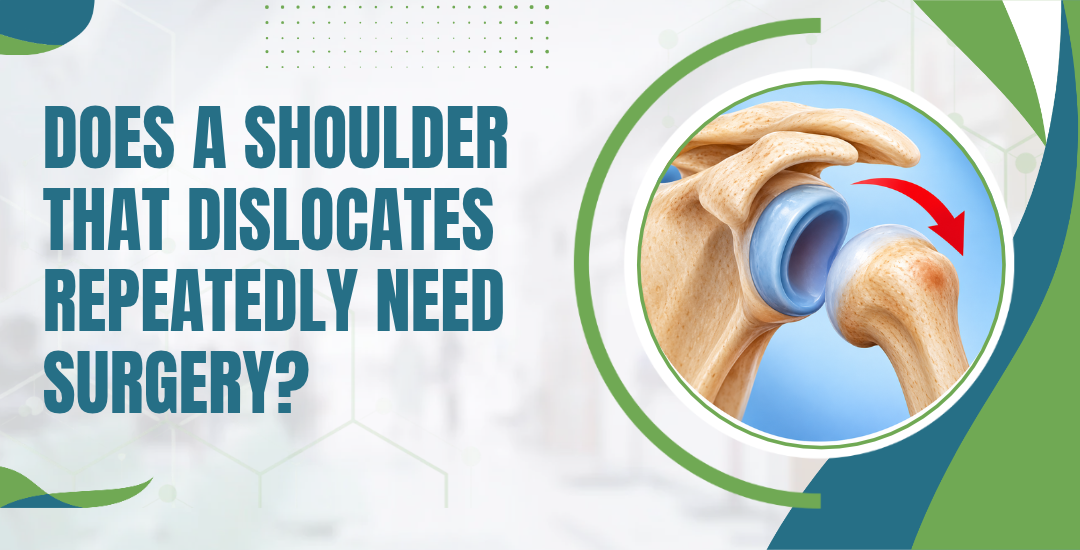
Yes, but not necessarily. When physiotherapy fails to prevent the shoulder from slipping, surgery is generally suggested, as every slip can harm the labrum, cartilage and bone and cause the joint to loosen. It is most likely to be required by young, active people as well as those who have a torn labrum or damage to the bones. The goal of shoulder dislocation surgery is to fix the torn tissue (and sometimes the bone) to prevent the recurrent dislocation. A diagnosis and imaging determine the best course of action for you.
According to Dr. Arpit Dave, an Arthroscopic Surgeon in Dahisar, Mumbai “Every time a shoulder dislocates, the soft tissue around the socket, and sometimes the bone, can take a little more damage. If the shoulder keeps slipping despite physiotherapy, we usually discuss surgery, because waiting often makes the repair more complex. The scans tell us whether a keyhole repair is enough or whether the bone needs attention too.”
Wondering whether a shoulder that keeps dislocating needs surgery in your case?
When is Surgery Recommended for a Dislocating Shoulder?
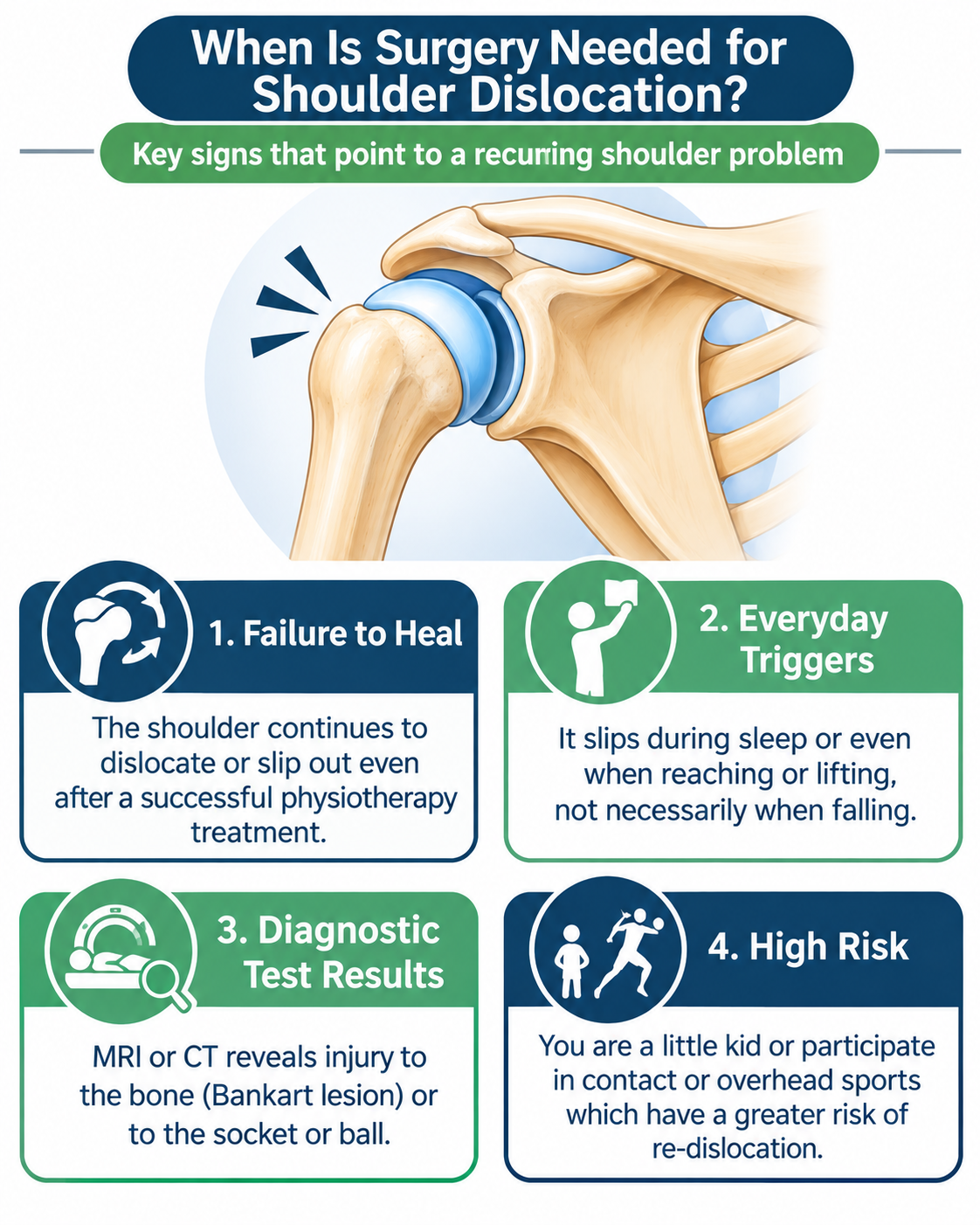
A detailed assessment at a shoulder dislocation treatment consultation shows which of these apply to you.
Learn What Shoulder Instability Surgery Entails.
- Shoulder instability surgery is tailored to fit your scans:
- Arthroscopic Bankart repair is a procedure that involves inserting small anchors into the socket with keyhole incisions to re-attach the torn labrum.
- Extra soft tissue added: If there is a dent on the ball of the joint that can get caught on the socket, the dentist will add extra soft tissue to the ball of the joint.
- Bone-block procedures: If a good amount of bone is missing from the socket, a bone transfer like the Latarjet may be a possibility.
- Rehabilitation: Sling for a few weeks, followed by physiotherapy and finally sport after a few months.
The dent behind many dislocations, called a Hill-Sachs lesion, is the reason a remplissage procedure is sometimes added to the repair.
Should surgery be offered to people who experience recurrent dislocations?
- Activity level: Patients who are active are more likely to have a recurrent dislocation of the shoulder.
- Slipping and/or frequent episodes: Surgery is indicated if the shoulder slips with little effort and/or slips often.
- Bone loss: The depth of the socket or the ball may vary and this will influence the type of surgery needed.
- Physiotherapy may help loosen shoulders if they are looser, but not if they are torn.
Frequently Asked Questions
Is there a way that physiotherapy can prevent a shoulder from dislocating again?
Physiotherapy builds up muscles around the joint and will be sufficient for some, particularly if there is not a significant structural tear in the joint. Physiotherapy is sometimes not sufficient to rectify a torn labrum or when the bone is damaged, and the shoulder continues to slip.
What happens if I delay surgery for a shoulder that keeps dislocating?
Each new dislocation can add damage to the labrum, cartilage and bone, which may make the repair more complex later and can raise the risk of early wear in the joint.
How long is recovery after surgery for recurrent shoulder dislocation?
The arm is usually protected in a sling for the first few weeks, followed by supervised physiotherapy. Full recovery takes several months, and return to contact sport usually takes longer.
Is there a chance for the shoulder to come loose again following surgery?
It can, but the risk is reduced following a well-planned repair. It’s more common among young contact sports players and in cases of extensive bone loss, hence the reason that it’s matched to your scans.
Disclaimer :
This blog is for educational and informational purposes only and should not be considered professional advice.