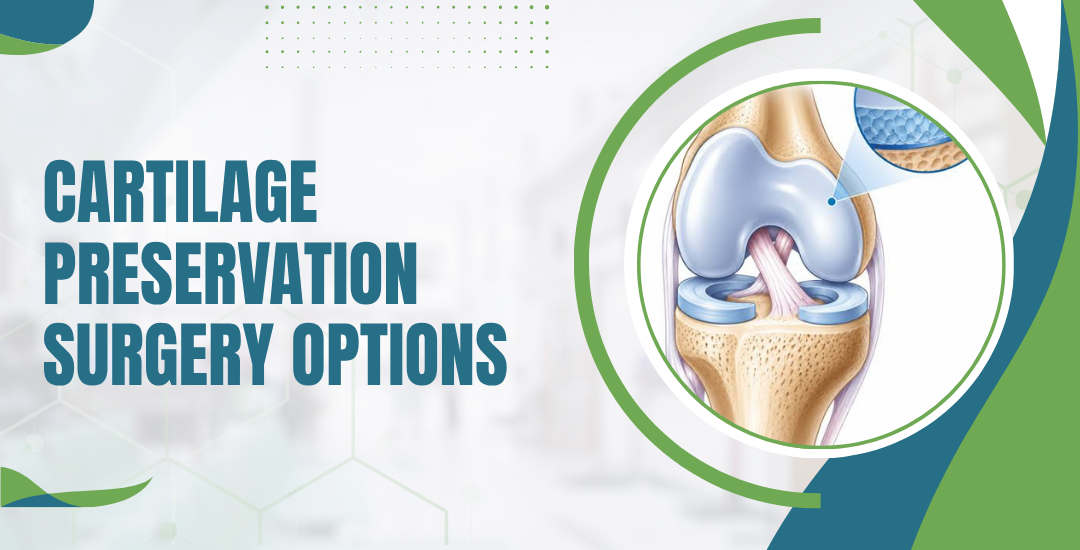
Cartilage preservation surgery covers microfracture, osteochondral autograft transfer (OATS), osteochondral allograft, and matrix-induced autologous chondrocyte implantation (MACI), chosen mainly by defect size, depth, and joint alignment. Articular cartilage has no direct blood supply, so it doesn’t heal well alone. Small lesions suit marrow stimulation or plug transfer, while larger ones often need cell-based or graft-based repair.
According to Dr. Arpit C Dave, Arthroscopic Surgeon in Dahisar, “A repair holds up only when it matches the defect, because a technique that suits a 1 cm lesion won’t survive a 4 cm one.”
Knee giving way even though the swelling has settled?
Which Surgeries Repair Small Cartilage Defects?
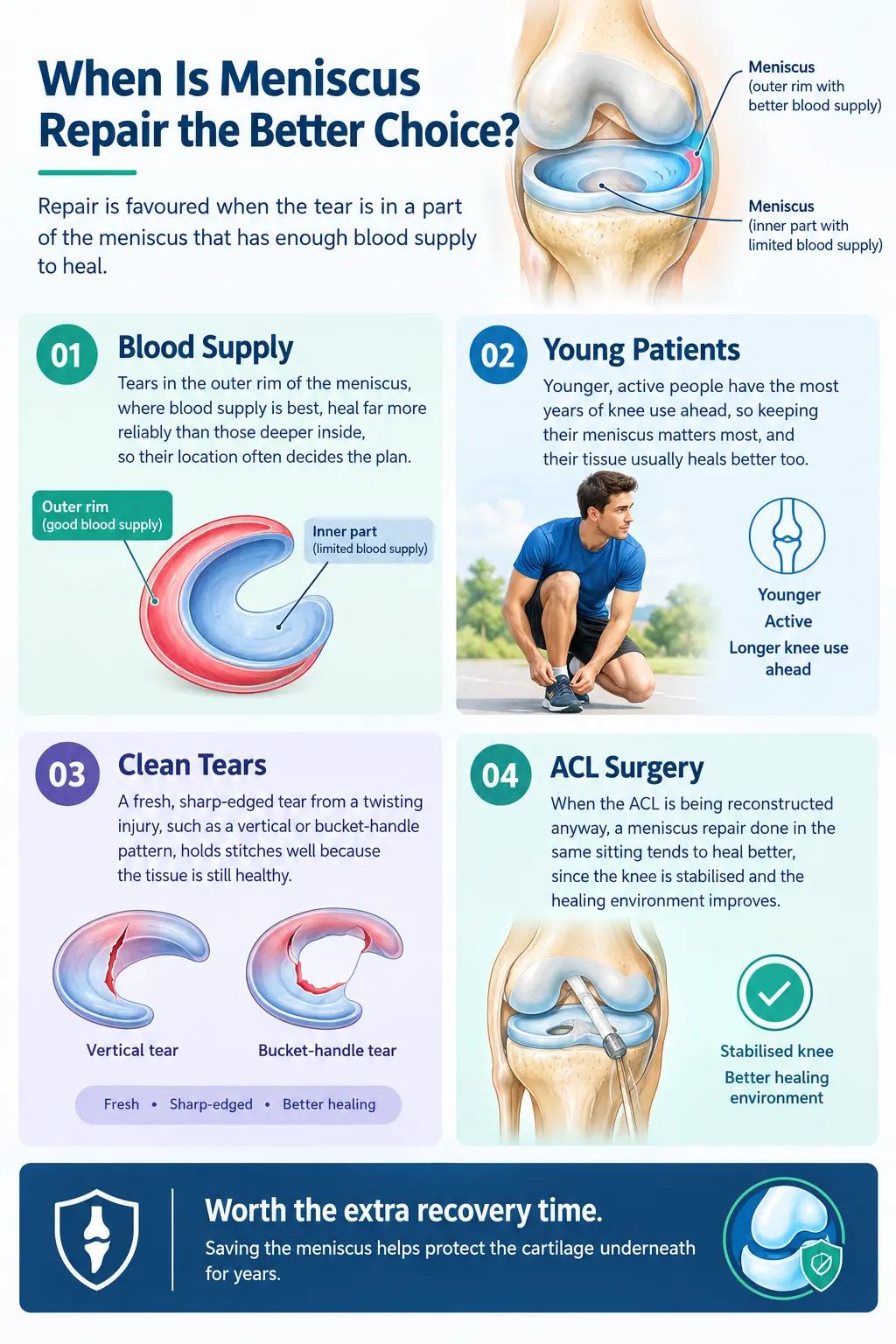
Meniscus damage often comes with cartilage injury, and meniscus tear treatment can be done in the same sitting.
Which Options Suit Larger Cartilage Defects?
Defects beyond roughly 3 to 4 cm², or ones reaching deep into bone, generally need cell-based or graft-based reconstruction.
- MACI: Cartilage cells taken during one arthroscopy are grown in a lab and seeded onto a collagen membrane, then fixed into the defect in a second operation weeks later.
- Allograft: Fresh donor bone with its cartilage layer can replace big or deep defects, which helps when the bone underneath is damaged too.
- Alignment: And if the leg’s alignment overloads one side of the knee, a corrective osteotomy usually goes alongside any repair, since new cartilage doesn’t last under that kind of stress.
- Rehab: Weight-bearing stays limited for several weeks, then graded physiotherapy builds back over six to twelve months before sport.
Bigger defects heal slowly. Patience pays off, because that’s where a durable repair changes the outcome most. For a related knee problem, read about pain behind the knee.
When Is Cartilage Surgery Actually Needed?
Surgery is considered when a defined cartilage lesion causes symptoms that don’t respond to non-surgical care. Not every defect needs an operation.
- Symptoms: Persistent catching, swelling after activity, and deep joint-line pain lasting beyond a few weeks often point to a structural cartilage problem rather than simple strain.
- Imaging: MRI maps the size and depth of the defect, and it’s what separates a lesion that needs repair from one that only needs watching.
- Failed rehab: If three to six months of physiotherapy, activity changes, and injections haven’t settled the pain, surgery enters the conversation.
- Arthritis: Widespread wear across the whole joint is a different problem altogether, so focal repair generally isn’t offered once arthritis has taken over.
Many small, early lesions improve with load management and physiotherapy, and that’s always tried first. Imaging and rehab history are reviewed before surgery is advised, and when ligaments are torn as well, ACL tear surgery is planned alongside the cartilage repair.
Key Takeaways
- Microfracture and OATS suit small defects under about 2 cm² in a stable knee.
- MACI and allograft are reserved for larger or deeper lesions.
- Misaligned legs need correction, or the repair won’t last.
- Recovery after cell-based or graft-based repair usually runs six to twelve months.
- Surgery is considered only after non-surgical care has failed.
Frequently Asked Questions
What is microfracture surgery?
A procedure that stimulates bone marrow to form repair tissue in small cartilage defects.
Is MACI done in one surgery?
No, it needs two stages: cell harvest first, then implantation weeks later.
How long is recovery after cartilage surgery?
Return to sport typically takes six to twelve months, depending on the technique used.
Can cartilage damage heal without surgery?
Small, early lesions can settle with physiotherapy and load management, but large defects rarely do.
Disclaimer :
This blog is for educational and informational purposes only and should not be considered professional advice.