
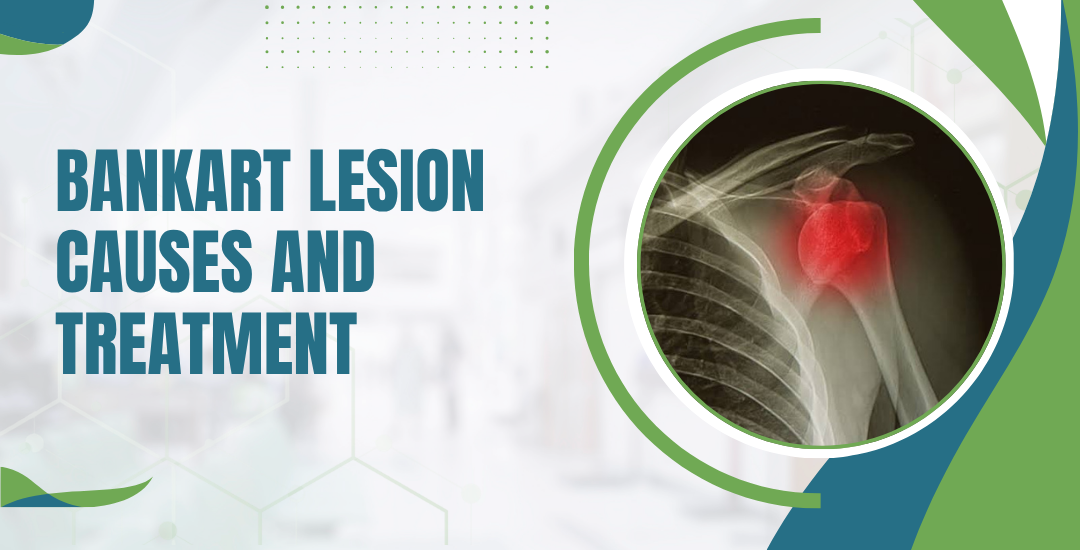
A Bankart lesion is a tear of the labrum, the ring of cartilage that lines the shoulder socket, and it’s usually caused by a traumatic anterior shoulder dislocation. The tear detaches the lower front portion of the labrum from the glenoid rim, which removes the natural block that keeps the humeral head centered in the joint. Without that block, the shoulder becomes prone to repeat dislocations, especially in younger, more active patients. Some tears involve soft tissue alone, and others carry a small fragment of bone off the glenoid rim, known as a bony Bankart lesion.
According to Dr. Arpit C Dave, Arthroscopic Surgeon in Dahisar, a labrum torn off the glenoid rim doesn’t heal back into a position that keeps the shoulder stable, so waiting it out rarely fixes the underlying problem.
Had more than one shoulder dislocation since the first injury?
What Causes a Bankart Lesion?
Most Bankart lesions trace back to a single traumatic event rather than gradual wear and tear.
Dislocation: A forceful anterior shoulder dislocation is the single biggest driver of a Bankart tear because the labrum shears off the glenoid rim the moment the humeral head slides forward out of the socket.
Falls: Landing hard on an outstretched arm can shove the shoulder out of position with enough force to strip the labrum away from bone even without a full dislocation.
Sports: Rugby, wrestling and other contact sports load the front of the joint again and again until one awkward tackle or throw finally tears the tissue loose.
Age: Patients under thirty face a far higher risk of the lesion coming back after a first dislocation, and that’s mostly down to how loosely the healing tissue scars down in younger joints.
Recurrence rates climb sharply after a second dislocation. Not something to just wait out.
Cases with significant bone loss often need the Bankart-Remplissage procedure rather than a straightforward repair.
How Are Common Knee and Shoulder Injuries Treated Arthroscopically?
Treatment depends on the size of the tear, the amount of bone loss and how active the patient plans to stay.
Rest: A short period of immobilization in a sling combined with physiotherapy is usually tried first in patients with a single dislocation and minimal ongoing instability.
Arthroscopy: Arthroscopic Bankart repair reattaches the torn labrum to the glenoid rim using small suture anchors, and surgeons often address an accompanying rotator cuff tear in the same sitting.
Latarjet: When bone loss on the glenoid is significant, a Latarjet procedure transfers a piece of the coracoid bone to rebuild the socket and give the joint a sturdier block against future dislocation.
Rehab: Recovery after arthroscopic repair usually means several weeks in a sling followed by a structured strengthening program that can stretch past four months before full sport clearance.
Skipping structured rehab is the single biggest reason repairs fail later. So the surgery really is just half the job.
Shoulder stiffness after any of these repairs is common, and the frozen shoulder guide covers how that’s managed.
Why Choose Dr. Arpit C. Dave?
Dr. Arpit C Dave is an orthopedic and arthroscopic surgeon with over 13 years of experience and more than 6000 surgeries performed, with fellowship training in shoulder instability surgery across Italy, Spain and France. His practice focuses specifically on arthroscopic stabilization for recurrent shoulder dislocation.
Patients treated for Bankart lesions here typically return to full sport activity within four to six months, with a documented success rate above 95 percent for first-time stabilization surgery. A joint that keeps slipping out of place isn’t something to just manage forever.
Frequently Asked Questions
Can a Bankart lesion heal without surgery?
Rarely, since a torn labrum doesn’t reattach to bone on its own.
Is arthroscopic Bankart repair a major surgery?
It’s minimally invasive with small incisions but still needs structured rehab afterward.
How long is recovery after a Bankart repair?
Most patients need four to six months before full sport clearance.
Can a Bankart lesion recur after repair?
Yes, especially with further trauma or incomplete rehabilitation in younger patients.