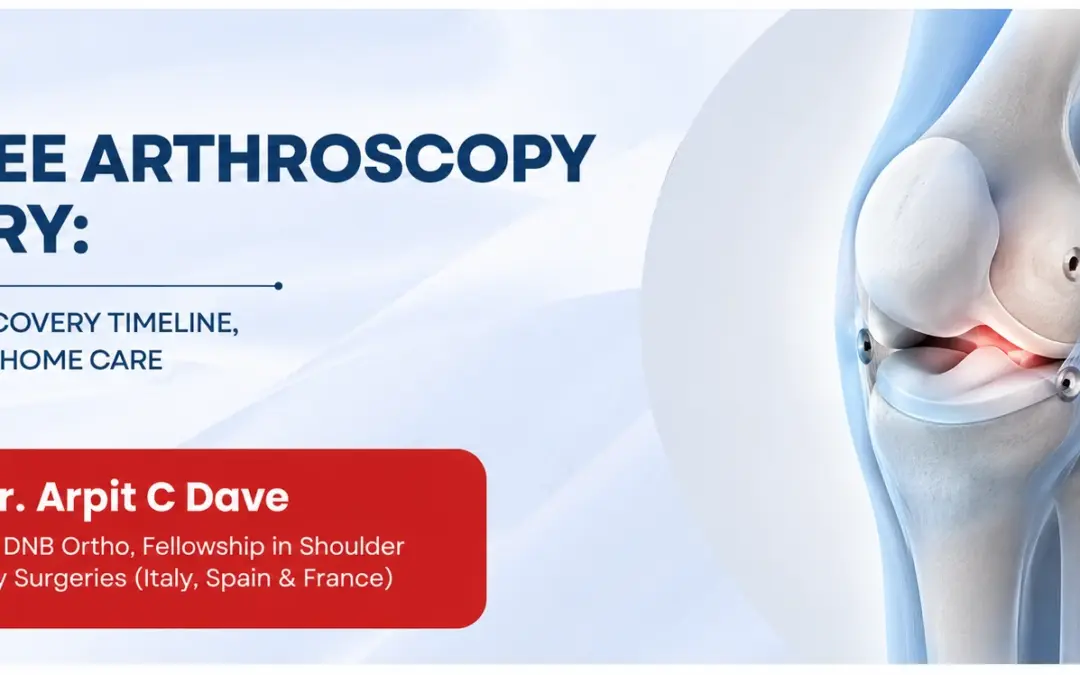
Knee arthroscopy is a keyhole procedure used to treat problems such as meniscus tears, cartilage damage, and ligament injuries. The surgery itself is only the first step; post-knee arthroscopy recovery determines how well the knee regains movement, strength, and function.
“Recovery after knee arthroscopy is not the same for every patient. The timeline depends on what was treated during surgery, how much swelling develops, and how consistently rehabilitation is followed.”
Dr. Arpit C. Dave, Orthopedic Surgeon | Arthroscopy & Sports Injury Specialist
Recovery is different for every patient. A simple procedure may settle within weeks, while recovery after knee arthroscopy can take longer after meniscus repair, ACL reconstruction, cartilage procedures, or ligament reconstruction. In this guide, I will explain the expected recovery timeline, pain relief and pain control, swelling care, walking tips, home care, exercises, and warning signs that should not be ignored.
Quick Answer
Mild pain. Some swelling. A bit of stiffness. That’s the baseline for most people, lasting anywhere from a few days to a few weeks, and a lot of patients are walking again pretty soon after surgery.
How soon depends on what exactly was done. Simple arthroscopy usually wraps up in 2 to 6 weeks. Repair surgeries take longer, sometimes months of rehab.
Meniscus repair, ACL surgery, cartilage work? Different story entirely. These need more protection, a slower return to sports injury care, heavier activity pushed back further. Swelling, how well pain’s controlled, how seriously you take rehab, all of it matters here.
What to Expect After Knee Arthroscopy Surgery
PRP is made from your own blood. A small sample gets drawn, then spun in a centrifuge so the platelets the cells your body uses for clotting and for releasing healing signals end up far more concentrated than they normally are.
I usually explain it to patients like this: platelets are like site supervisors on a construction project. They don’t lay the bricks themselves, but they shout instructions and get the crew moving faster. That’s the whole idea behind PRP more platelets means more of those healing signals inside the joint, which in theory creates a better environment for repair.
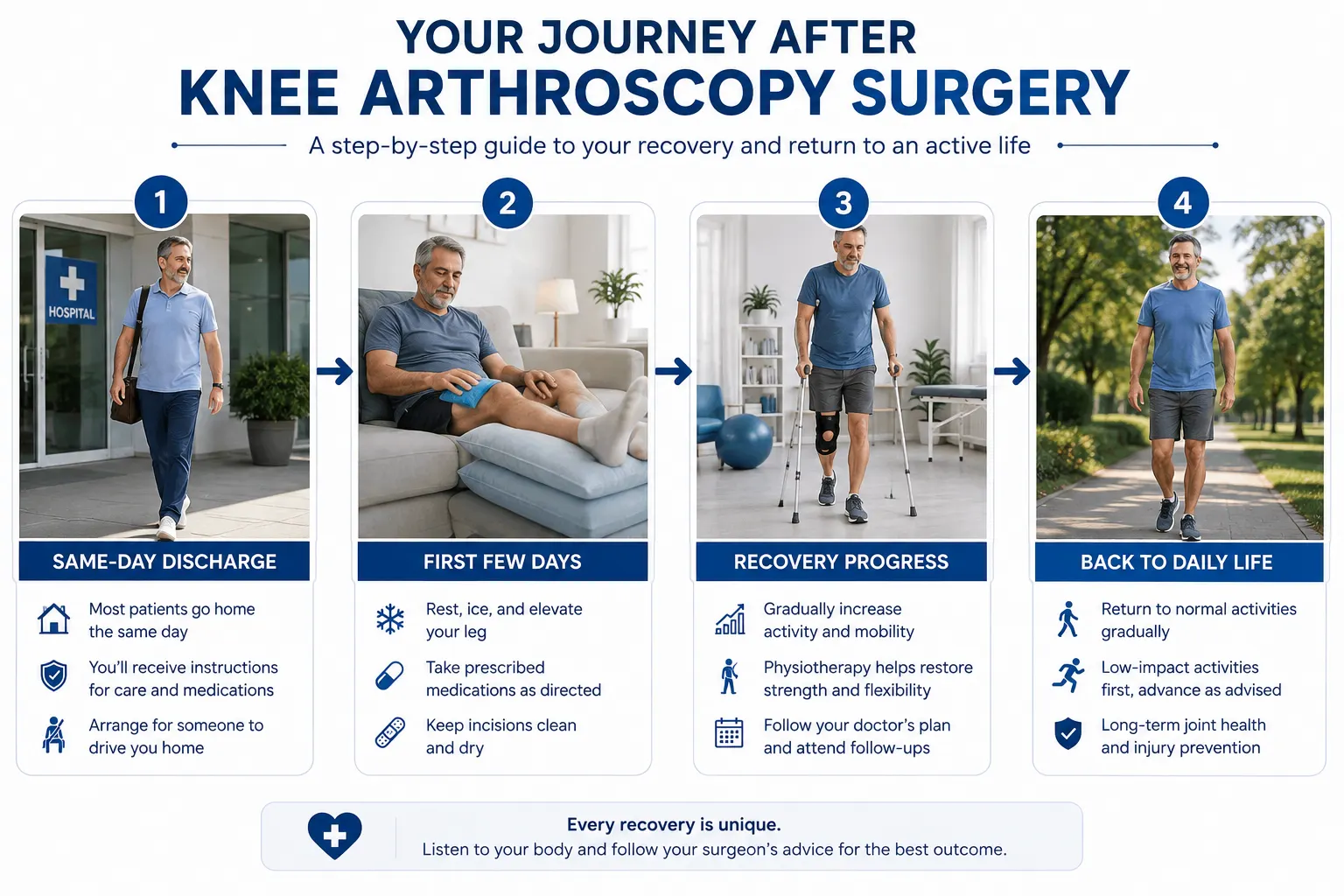
Going Home the Same Day
Most people go home the same day, which honestly catches a lot of them off guard. It’s normal though, arthroscopy is usually a day-care procedure, not something that keeps you overnight.
You might leave with a dressing. Or a compression wrap. Sometimes a brace, sometimes crutches. Depends entirely on what was actually operated on.
The First Few Days
Pain, swelling, some tightness, a bit of bruising, all fairly standard in the early days. The knee tends to feel heavy or stiff, especially right after you’ve been sitting for a while.
Don’t expect it to just disappear overnight. It fades gradually, not all at once.
Recovery Depends on the Procedure
How fast you’re back on your feet really comes down to what the surgery actually involved. Take a partial meniscectomy, that one tends to get people walking and moving a lot faster than most other procedures.
If things don’t seem to be improving, or walking still feels wrong, don’t just wait around hoping it sorts itself out. Get a knee pain consultation with Dr. Arpit C. Dave and find out fairly quickly whether you’re actually on track.
Knee Arthroscopy Recovery Timeline
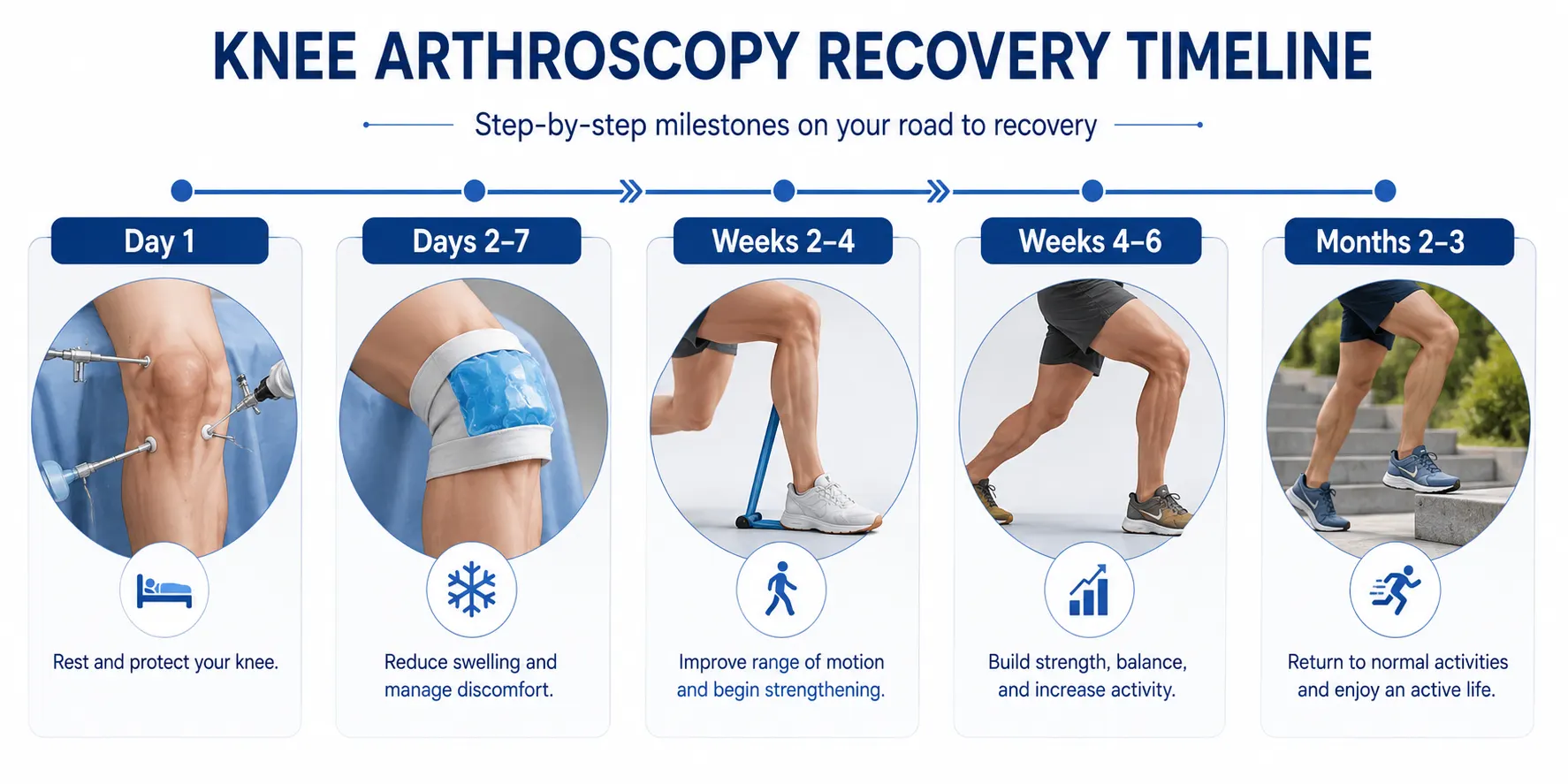
Day 1
Pain and swelling usually peak right here, once the anaesthesia’s worn off properly. Ice, elevation, rest, that’s really the whole game plan on day one. Walking’s often limited. Crutches are common.
Days 2 to 7
Pain starts to settle down for most people, though the swelling can stick around a bit longer than expected. Short walks around the house, assuming your surgeon’s cleared weight-bearing.
Ankle pumps, quad tightening, simple stuff, usually started around here just to keep stiffness away and circulation moving.
Weeks 2 to 4
A lot of patients start feeling more stable now, walking gets easier after the less involved procedures. But don’t be shocked if swelling comes back a bit by evening, or after you’ve been on your feet more than usual. Pacing actually matters, not just pushing through.
Daily stuff gets more manageable. Twisting, kneeling, deep squats, long walks, those are usually still a no.
Weeks 4 to 6
Motion and strength tend to pick up noticeably by now. Desk work, light chores around the house, shorter walks, realistic for a lot of people at this stage.
Had a repair done, though? You might still be in a brace, or on crutches, or dealing with partial weight-bearing well into this window.
Months 2 to 3
This is usually when people start feeling like themselves again, better strength, better range of motion, more confidence in the knee generally. Low-impact stuff gets easier. But running, pivoting, cutting, full sport? Wait for your surgeon or physio to actually clear you first.
Pain Relief and Pain Management After Knee Arthroscopy
No, not in the sense of laying down new cartilage where it’s already been lost. Cartilage barely has a blood supply, and that’s precisely why it heals so poorly to begin with. PRP doesn’t override that basic biology, no matter how it’s marketed.
What it can realistically do, based on the evidence we have so far:
- Reduce inflammatory markers inside the joint
- Give meaningful pain relief for weeks to months in many patients
- Possibly slow how fast cartilage breaks down in early-stage arthritis
- Improve the joint’s internal environment, which may help protect whatever cartilage remains
I’ve had patients walk noticeably better after PRP less stiffness in the morning, fewer bad days, sometimes enough improvement that surgery gets pushed off for a year or two. What I have never seen is PRP putting back cartilage that an MRI already showed was gone. Getting that expectation right at the start saves a lot of frustration later.
Why Early Pain Control Matters
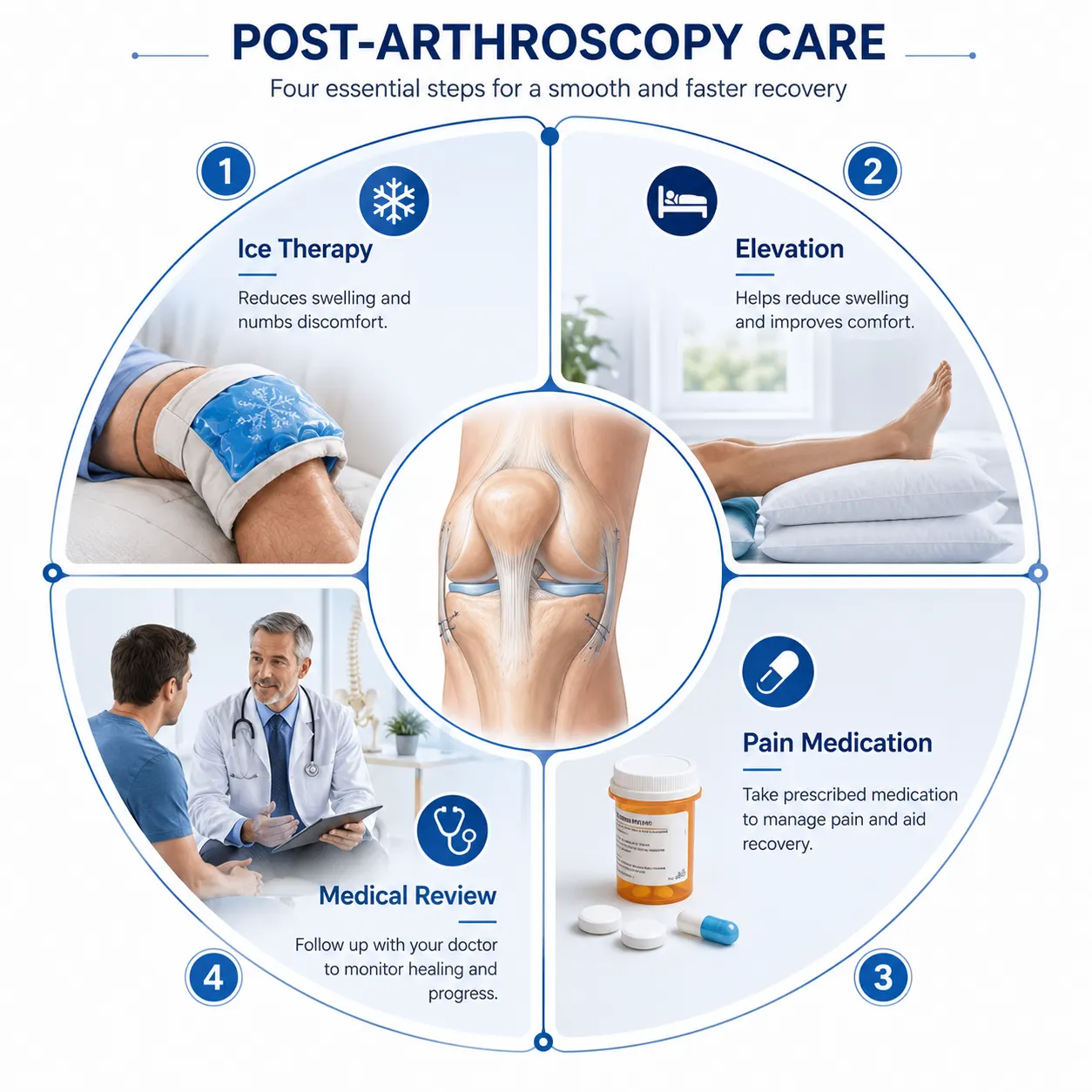
Mild to moderate pain, easing gradually, that’s what to expect. Good pain relief really comes down to getting ahead of the inflammation early rather than just reacting once it’s already bad, all while keeping the knee moving safely.
Ice, Elevation, and Rest
Ice actually helps, genuinely. 15 to 20 minutes at a stretch, cloth between the pack and your skin always. Elevation matters just as much, keeps fluid from pooling around the joint. First 48 hours, try keeping the leg above heart level whenever you reasonably can.
Pain Medicine
Paracetamol, anti-inflammatories, whatever else gets prescribed depending on your case. Taking it on schedule in the early days makes a real difference, exercises get easier, movement feels less like a chore.
When Pain Needs Medical Review
Pain getting worse instead of better? Severe even while resting? That’s your signal to get it looked at. Same with fever, redness, pus, calf pain, or swelling that just seems like too much.
Swelling Care After Knee Arthroscopy
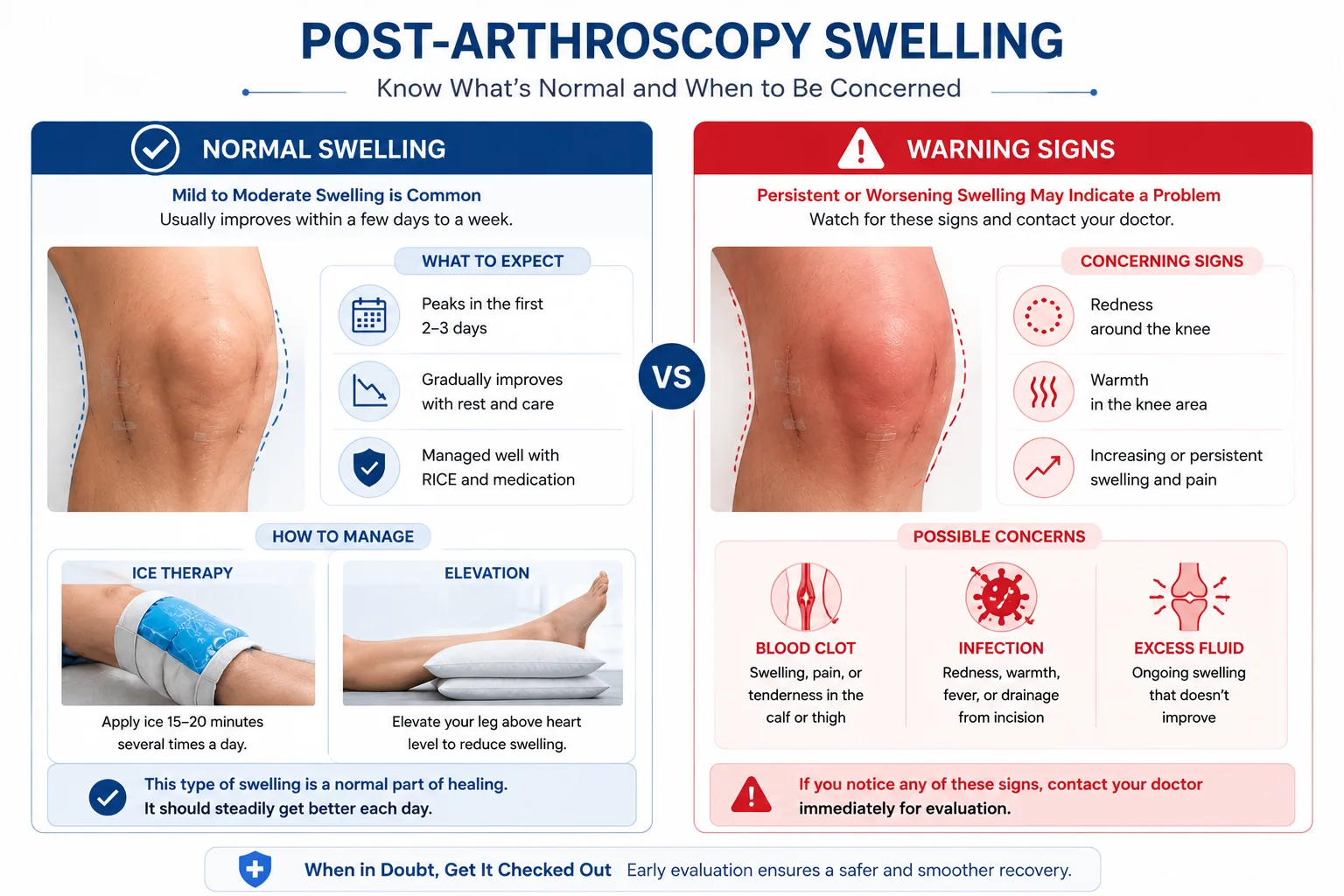
Swelling worries patients more than almost anything else, if we’re being honest. Getting the basics right in the first few weeks changes a lot, comfort, healing speed, both.
Daily Swelling-Care Habits
Ice and elevation, still your best tools. Use them regularly, not just when the knee’s visibly puffed up. Compression wraps, if you’ve got one, help keep fluid in check between icing sessions.
And try not to spend long stretches standing or sitting with the leg down early on, gravity’s not doing you any favors there.
What Counts as Normal
A little swelling by evening, or after being active, pretty normal, even weeks into things. That’s just healing at work, not a red flag, as long as it settles down with rest and elevation overnight.
Swelling that keeps building, day after day? That’s different. Especially with redness, warmth, or fever thrown in. Worth checking promptly.
Walking Tips After Knee Arthroscopy
Walking should ramp up slowly, based on what your surgeon’s actually told you about weight-bearing, not on how the knee happens to feel that particular morning.
Start short, stay indoors
A few brief walks around the house in week one beat one ambitious outdoor walk that leaves the knee swollen by dinner.
Use crutches or support as directed
even once it feels like overkill. Rushing full weight-bearing is one of the more common ways recovery stalls.
Watch how you're walking.
A limp still there after a couple of weeks? Worth mentioning at your follow-up, compensating awkwardly tends to strain other parts of the leg.
Add distance slowly
A bit more each week beats jumping straight from short indoor walks to long ones outside.
Stop before the pain builds,
not after it’s already there. Pushing through growing pain usually just means you’ve gone too far.
Home Care After Knee Arthroscopy
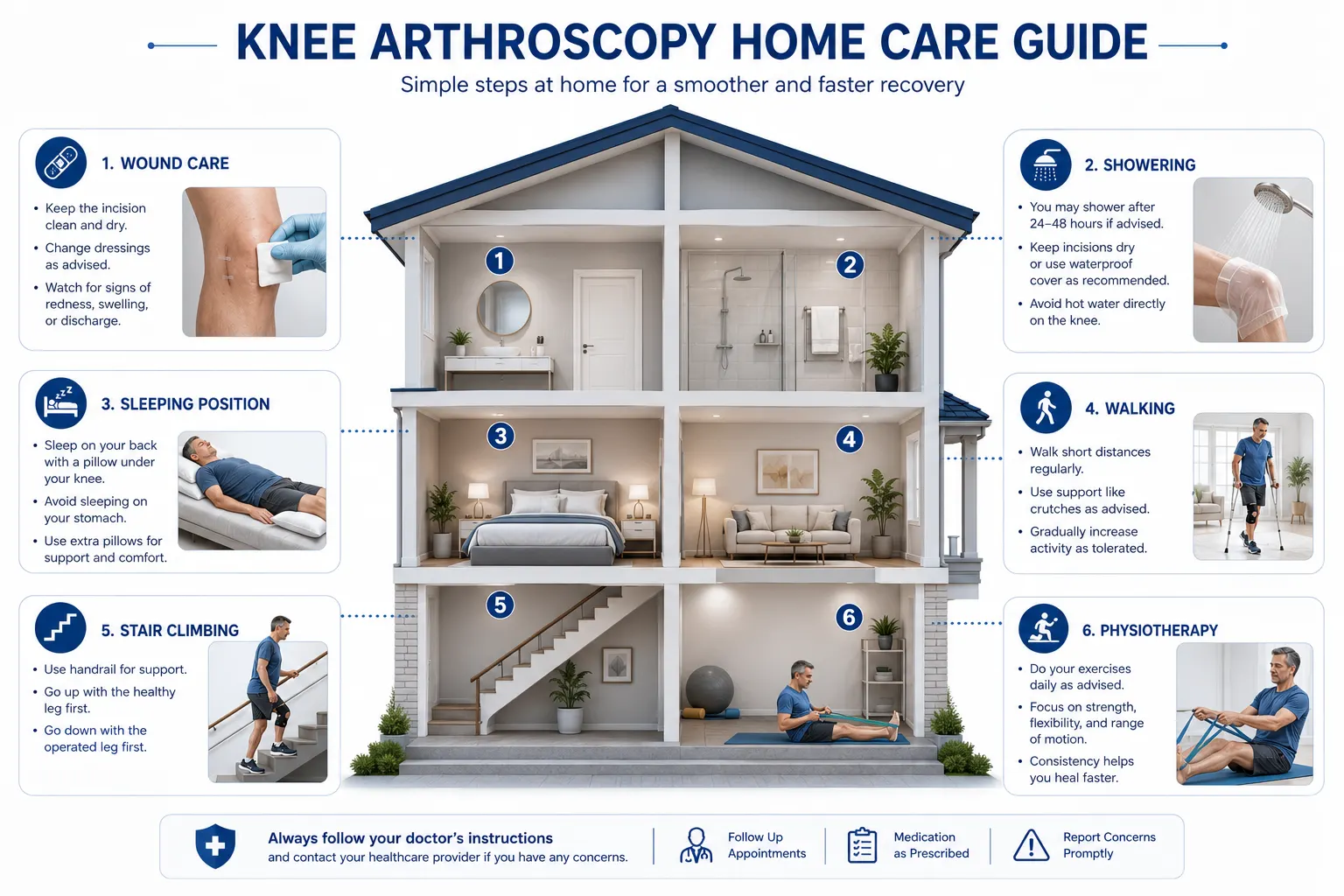
Good home care protects the incision, keeps swelling in check. Here’s what that looks like in practice:
- Keep the dressing clean and dry.
- Don’t remove the bandage early unless your surgeon’s specifically said to.
- Shower once it’s actually safe, skip soaking the knee in a tub or pool until the wound’s fully closed.
- Sleep with the leg supported if that’s what’s been advised, though avoid a pillow sitting right under the knee for long stretches.
- Walk only as much as your instructions allow. No more.
- Take stairs slowly, one at a time, hold the railing.
- Hold off on driving until you can bend the knee comfortably, react fast, and you’re off the stronger pain meds.
- Start physiotherapy when advised. Early, guided movement genuinely helps stiffness stay away.
Persistent swelling? Walking that’s still difficult? Questions about the exercise plan? Book a consultation with Dr. Arpit C. Dave, worth getting guidance specific to your case rather than guessing.
Exercises for Faster Recovery
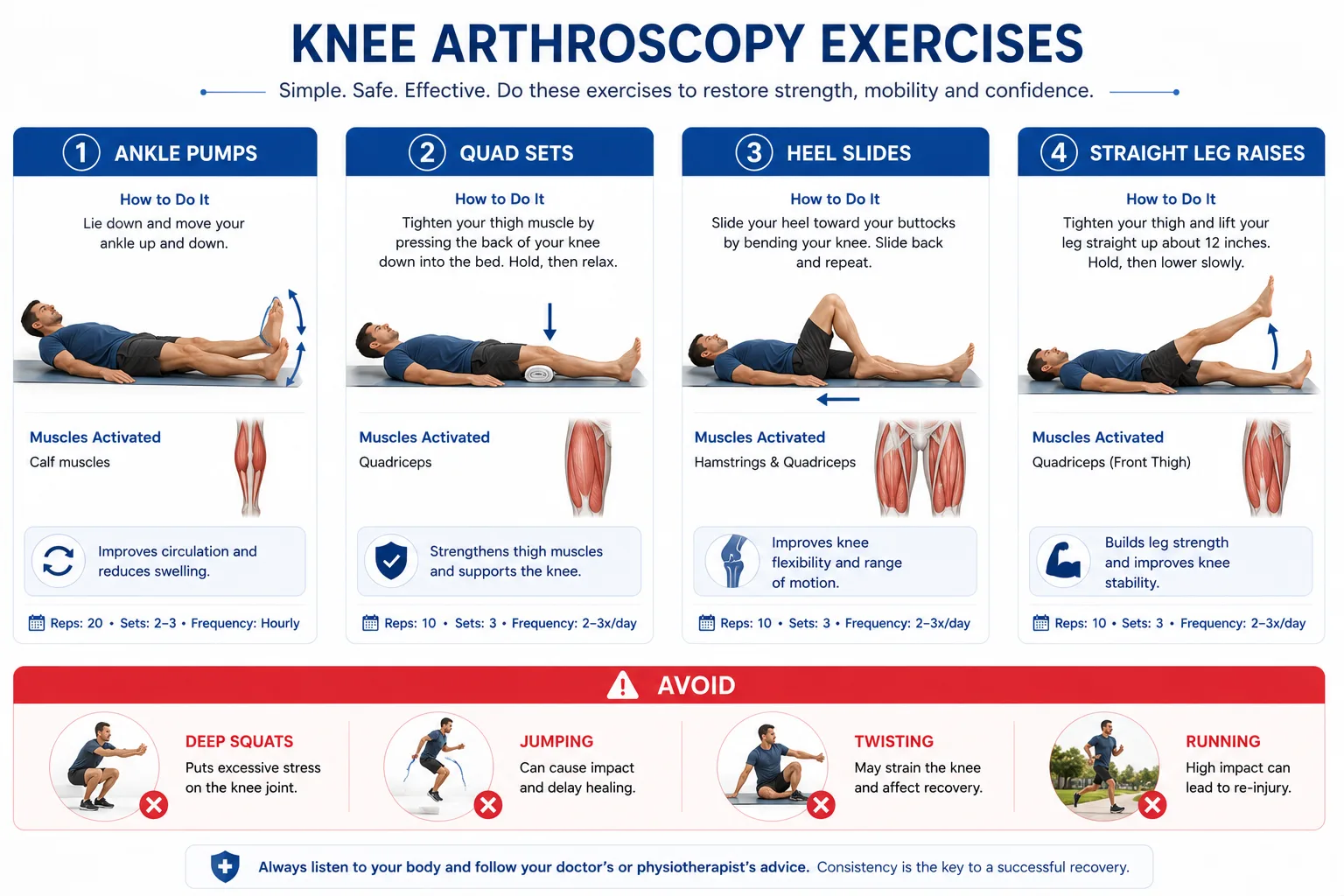
Keep it gentle, keep it regular, keep it pain-free. That’s really the whole philosophy, get motion back, wake up the muscles supporting the knee.
- Ankle pumps: Gets circulation moving, lowers swelling risk.
- Quad sets: Wakes up the thigh muscle, improves control around the knee.
- Heel slides: Eases the knee into bending, no forcing involved.
- Straight leg raises: Builds strength once the knee can hold itself straight on its own.
Deep squats, running, jumping, twisting, kneeling, skip all of that for now. These can irritate healing tissue, particularly if there’s been a repair involved.
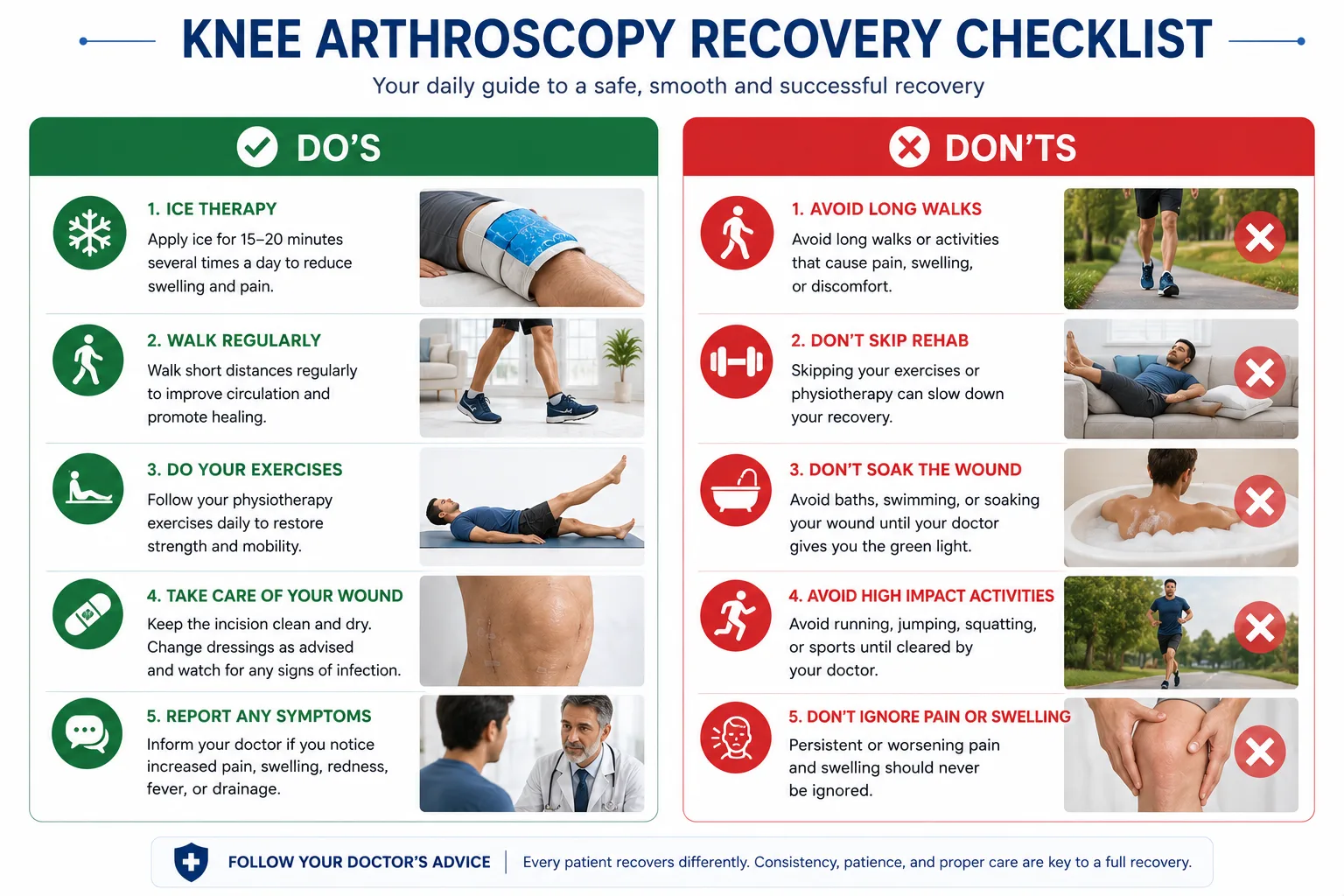
Do's and Don'ts After Knee Arthroscopy
|
Do |
Don’t |
|
Use ice and elevation to reduce swelling. |
Ignore worsening pain or swelling. |
|
Walk only as allowed by your surgeon. |
Force long walks too soon. |
|
Do gentle exercises regularly. |
Skip rehab for several days. |
|
Keep the wound clean and dry. |
Soak the knee before the incision heals. |
|
Report concerning symptoms early. |
Assume all pain is normal. |
Warning Signs – When to Contact Your Orthopedic Surgeon
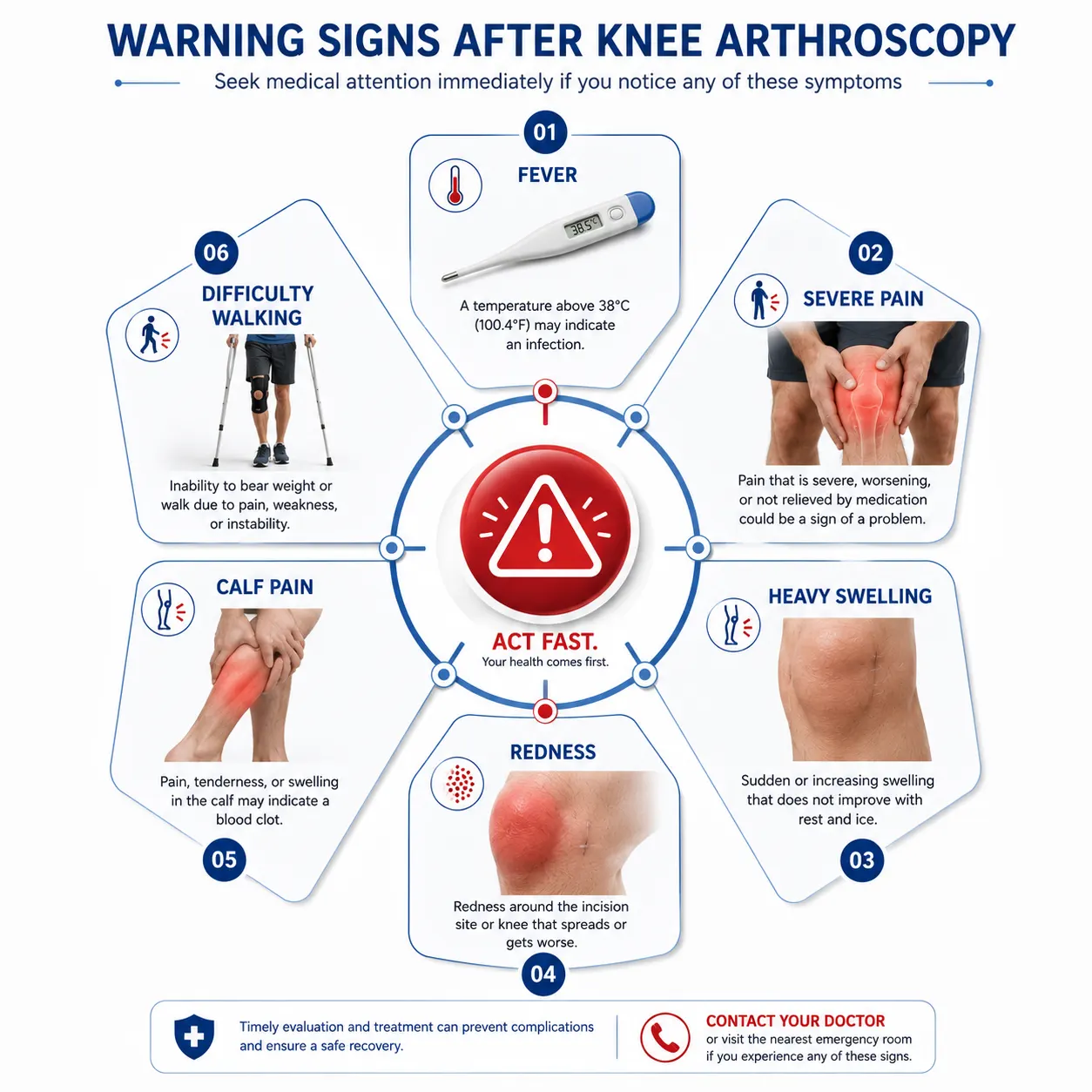
Fever. Worsening pain. Heavy swelling. Redness, pus, discharge from the wound. Calf pain or swelling. Walking that keeps getting harder instead of easier. Any of these, get in touch with your surgeon.
These aren’t things to sit on. Could be infection, poor healing, even a blood clot.
Frequently Asked Questions
How long does recovery after knee arthroscopy take?
Depends on the procedure. Simple arthroscopy, maybe 2 to 6 weeks. Repair surgery can stretch into months.
When can I walk after knee arthroscopy?
Some patients are up the same day, or the next. Really comes down to pain, swelling, whether crutches are needed.
Is swelling after knee arthroscopy normal?
Yes, genuinely expected for days to weeks, especially once you’re more active.
How much pain is normal after surgery?
Mild to moderate in the first few days is typical. Should keep improving from there.
When can I drive again?
Once you’ve got real control of the knee, can bend it without a fight, and you’re off sedating medication.
Do I need physiotherapy after knee arthroscopy?
Pretty much always, yes. Big part of getting motion, strength, and function back the right way.
Can I return to sports quickly?
Not without clearance, no. Usually weeks, sometimes months of rehab before that’s even on the table.
Why does my knee feel tight?
Usually just swelling and stiffness. Gentle movement, some ice, that tends to help.
What if recovery feels slow?
Happens sometimes, particularly after repair work. Worth an orthopedic review to figure out what’s going on.
Conclusion
Post knee arthroscopy recovery is usually pretty straightforward after simple procedures. Gets more involved after meniscus repair, ACL reconstruction, cartilage work, or ligament surgery, that’s just how it goes.
Either way, the priorities stay the same: manage the pain, take swelling care seriously, walk carefully, build strength gradually.
Pain not easing? Walking still feels off? Recovery just seems slower than it should? Book a consultation with Dr. Arpit C. Dave and make sure everything’s actually healing the way it should be.