
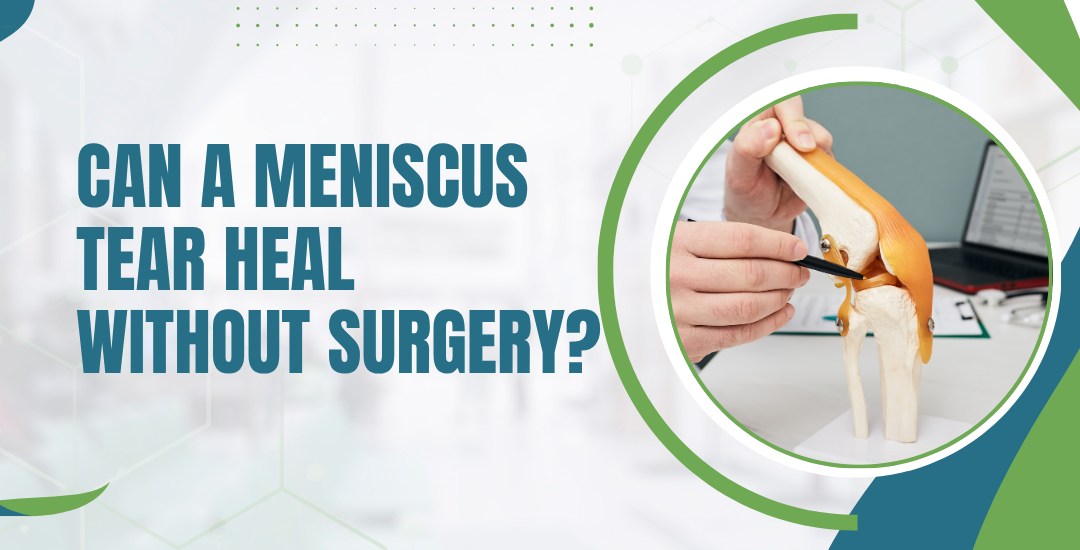
Some meniscus tears heal without surgery, but many don’t. Tears in the outer third of the meniscus have good blood supply and can heal with rest, physiotherapy and activity changes. Tears in the inner two-thirds get almost no blood flow, so they rarely heal on their own and usually need arthroscopic treatment. Whether yours can avoid surgery comes down to where the tear sits, how big it is and what type it is.
According to Dr. Arpit C Dave, Arthroscopic Surgeon in Dahisar, “People hear meniscus tear and assume surgery is automatic, but a fair number heal with the right rehab, it’s the ones that lock or keep swelling that land on my operating table.”
Knee still catching or swelling weeks after a twist?
Which meniscus tears can heal on their own?
Healing potential depends mostly on blood supply, and a few tear types genuinely settle without an operation.
- Outer-edge tears. The outer rim has decent blood flow, often called the red zone, and small tears here can knit back together over six to eight weeks with proper care
- Small partial tears. Minor tears that don’t cause locking or instability usually calm down with rest, physiotherapy and a gradual return to activity
- Degenerative tears. Age-related wear tears in older, less active patients often respond well to physiotherapy and don’t need surgery unless symptoms persist
- No mechanical symptoms. If the knee bends fully, doesn’t lock and isn’t giving way, conservative treatment is worth a real attempt before anyone reaches for surgery
For tears that don’t fit this picture, proper meniscus tear assessment matters before deciding anything.
When does a meniscus tear actually need surgery?
Certain signs tell you conservative care won’t cut it and surgery is the realistic route.
- Locking knee. A torn flap flipping into the joint and physically blocking movement won’t fix itself, and that mechanical lock is a clear surgical sign
- Inner-zone tears. Tears deep in the white zone with no blood supply simply can’t heal naturally, so trimming or repair becomes the practical option
- Persistent swelling. A knee that keeps swelling and hurting despite weeks of rest and physio is telling you the tear isn’t settling on its own
- Active patients. Younger, sporty people with bucket-handle or larger tears usually need repair to protect the joint and get back to full activity
Sorting out whether it’ll heal or not often starts with understanding why your knee swells after activity in the first place.
Why Choose Dr. Arpit C. Dave for Meniscus Tear Surgery?
Dr. Arpit C Dave holds an MBBS, DNB and Diploma in Orthopaedics with over 15 years in orthopaedic practice plus fellowship training across Italy, Spain and France. He’s performed more than 1000 arthroscopic procedures, with meniscus work being a routine part of his practice.
Surgery only gets recommended when the tear genuinely needs it. If rest and physio have a real shot, that’s tried first, no rushing anyone into theatre. Honest call every time.
Frequently Asked Questions
How long does a meniscus tear take to heal naturally?
Healable tears usually settle over six to eight weeks with proper care.
Can walking make a meniscus tear worse?
Yes, walking on a locked or unstable knee can extend the tear.
Will physiotherapy alone fix a meniscus tear?
It helps many small outer tears but won’t repair inner-zone tears.
Is an MRI needed to confirm a meniscus tear?
Usually yes, MRI confirms tear location, size and type accurately.