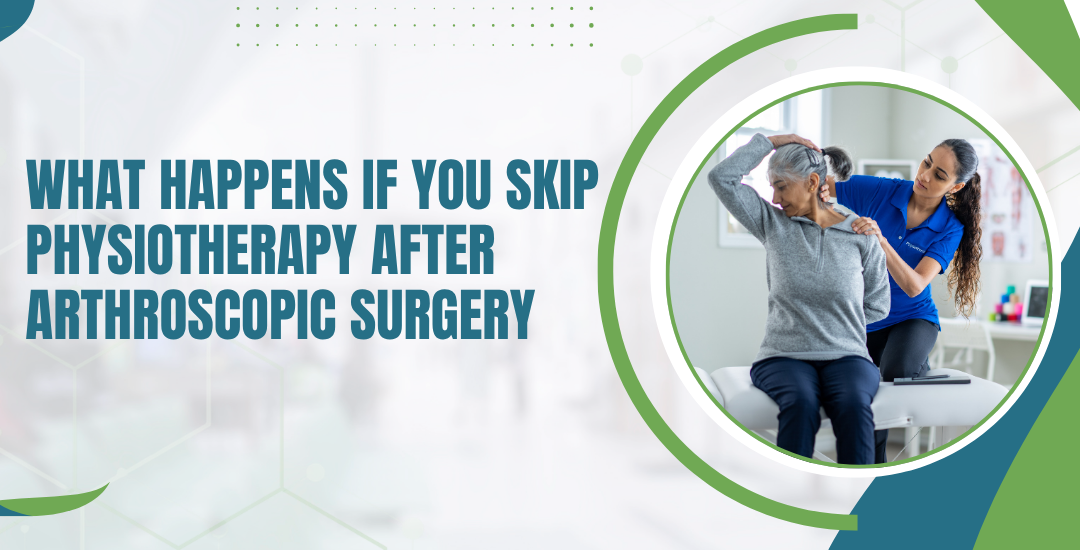
Skipping physiotherapy after arthroscopic surgery causes joint stiffness, muscle weakness, and a significantly higher risk of re-tearing the repair. The surgery fixes the structural damage, but rehabilitation restores movement, strength, and coordination around the joint. Without guided exercises, scar tissue forms in the wrong places and the joint loses range of motion within weeks. Most surgical failures aren’t due to the operation itself, they’re caused by poor post-operative recovery.
According to Dr. Arpit C Dave, Arthroscopic Surgeon in Dahisar, “The repair I do in the operating room is only half the job, the other half happens in the physio room over the next three months.”
Worried about losing knee or shoulder function after surgery?
What goes wrong inside the joint without rehab?
The joint doesn’t sit quietly and heal on its own, and skipped physiotherapy triggers predictable structural problems.
- Scar tissue. Internal scarring called arthrofibrosis builds up around the repair site within the first six weeks and physically blocks normal joint movement.
- Muscle wasting. Quadriceps and rotator cuff muscles lose visible bulk within two weeks of inactivity, sometimes shrinking by 20 percent or more.
- Stiff capsule. The joint capsule tightens when it isn’t moved through full range, leaving patients unable to bend or rotate properly even months later.
- Poor blood flow. Healing tissue needs movement to get adequate blood supply, and a static joint heals slowly with weaker scar tissue.
This stiffness pattern is a common reason patients later need treatment similar to frozen shoulder management even when they never had it originally.
How does skipping rehab affect long term recovery?
Long term outcomes depend almost entirely on what happens in the first three months post-surgery.
- Re-injury. Around 30 percent of ACL reconstructions fail in patients who skip rehab, mostly because weak surrounding muscles can’t protect the graft.
- Chronic pain. Joints that don’t move properly start hurting in new ways, and this pain often persists for years.
- Poor balance. Proprioception, your joint’s sense of position, doesn’t return without specific neuromuscular training.
- Reduced function. Patients commonly return to clinic months later unable to climb stairs or lift overhead, frustrated that the surgery didn’t seem to work.
Most of these complications aren’t surgical failures, they’re the predictable cost of skipping the rehab phase after Knee Surgery.
Why Choose Dr. Arpit C. Dave for Post Anthroscopic Surgery Consultation?
Dr. Arpit C Dave holds an MBBS, DNB, and Diploma in Orthopaedics with over 15 years in orthopaedic practice and fellowship training across Italy, Spain, and France. He has performed more than 1000 arthroscopic procedures with structured rehabilitation protocols built into every case.
Every surgical patient gets a written physiotherapy plan before leaving the clinic. Follow-ups track range of motion and strength at each milestone. The goal isn’t a successful surgery on paper. It’s a patient back to their actual life.
Frequently Asked Questions
When should physiotherapy start after arthroscopic surgery?
Usually within the first week, sometimes the day after surgery depending on the procedure.
How long does post-surgery physiotherapy last?
Most protocols run three to six months with gradual progression.
Can I do physiotherapy exercises at home?
Yes after initial supervised sessions teach you correct technique.
Will skipping rehab affect my surgery results permanently?
Often yes, lost range of motion and strength become hard to recover later.
Your content goes here. Edit or remove this text inline or in the module Content settings. You can also style every aspect of this content in the module Design settings and even apply custom CSS to this text in the module Advanced settings.