
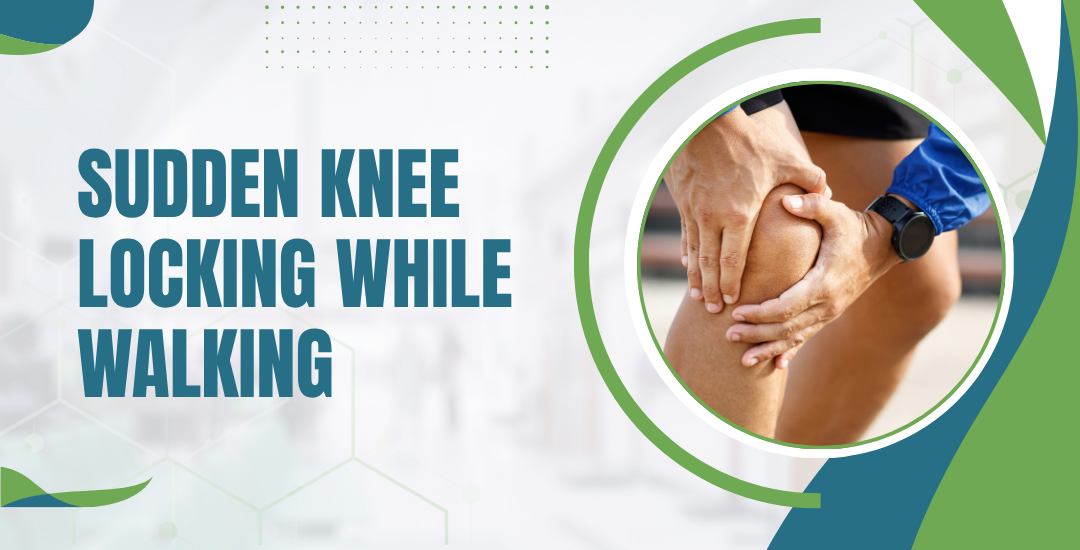
A knee that suddenly locks mid-step is not something to walk off and ignore. When the knee locks, it either refuses to straighten fully or momentarily jams and then releases with a click. Both feel alarming in the moment, and both are telling you that something inside the joint is mechanically wrong. Muscle cramps and stiffness do not cause true knee locking. What does is a structural problem inside the joint itself, usually something getting caught between the bones where it should not be.
According to Dr. Arpit C Dave, Arthroscopic Surgeon in Dahisar, “A knee that locks even once during normal walking needs to be investigated. It does not resolve on its own, and every time it happens there is potential for further damage to the cartilage and joint surface.”
Knee locking up while walking?
What is causing your knee to lock up?
The locking sensation comes from something physically blocking normal joint movement. There are a few structures that commonly cause this.
Torn meniscus: The most frequent cause. A flap of torn cartilage flips into the joint space and jams between the bones mid-movement. Bucket-handle tears are notorious for causing true locking where the knee cannot straighten at all. See the meniscus tear treatment for full details.
Loose body in the joint: Fragments of cartilage or bone break off and float freely inside the knee. They move unpredictably, which is why the locking comes and goes without warning. Cartilage damage from injury or early wear is the most common source.
ACL injury with associated damage: A torn ACL causes instability rather than true locking, but repeated giving-way episodes tear the meniscus over time, and the meniscus damage is what starts the locking. Worth knowing whether it’s a tear or a sprain first.
Plica syndrome: A thickened fold of joint lining that snaps across the knee during movement. Less common, but worth considering when imaging comes back relatively clear.
What makes it worse: Every locking episode grinds the obstructing tissue further into the joint. What starts as an occasional catch can become a knee that locks completely on stairs or going downhill.
What is a rotator cuff injury and how is it different?
A sudden twist with a pop and locking points to a meniscal tear; intermittent locking over months without a clear injury suggests a loose body or degenerative meniscal change. MRI is first-line for soft tissue causes; add X-ray if a bony fragment or joint space narrowing is suspected.
Meniscal tears causing locking: Most locking meniscal tears require arthroscopic surgery. The torn flap is trimmed or repaired depending on location and blood supply. Physiotherapy alone will not reduce a displaced meniscal fragment.
Loose bodies: Arthroscopic removal is straightforward. The fragment is located under camera guidance and extracted through a keyhole incision. Symptoms resolve quickly once it is out.
Associated cartilage damage: If locking has continued for months, the cartilage surface may have taken damage too. This is assessed and addressed during the same procedure where possible.
Recovery follows a structured phase-by-phase progression early movement, swelling control, graduated loading consistent with how rehab works after any arthroscopic knee procedure.
A locking knee that keeps being managed conservatively while the real cause goes unaddressed is a knee that quietly deteriorates. Early review is faster, simpler, and far less disruptive than dealing with the secondary damage that follows.
Why Choose Dr. Arpit C. Dave?
Dr. Arpit C Dave holds an MBBS, DNB and Diploma in Orthopaedics with over 15 years in orthopaedic practice and fellowship training across Italy, Spain and France. He has performed more than 6000 arthroscopic procedures across the knee and shoulder, including meniscal repairs, loose body removals and combined cartilage restorations.
Every patient presenting with a locking knee gets a structured clinical assessment followed by imaging before any surgical decision is made. Where the cause is clear and surgical, it is addressed arthroscopically with minimal downtime and a defined rehab pathway. A knee that locks once will lock again. Get it assessed before it gets worse.
Frequently Asked Questions
Is a locking knee always serious?
True mechanical locking, where the knee will not straighten, always has a structural cause and should be assessed. Occasional catching that resolves quickly is less urgent but still worth investigating.
Can a locking knee fix itself?
Muscle tightness can ease on its own, but true mechanical locking from a torn meniscus or loose body will not resolve without treatment.
Do I need surgery for a locking knee?
Most causes of true knee locking, particularly bucket-handle meniscal tears and loose bodies, require arthroscopic surgery. Conservative management does not remove the obstruction.
How long is recovery after surgery for a locking knee?
Most patients are walking normally within a few weeks. Full return to sport depends on what was repaired and follows a phased rehab plan set from day one.